
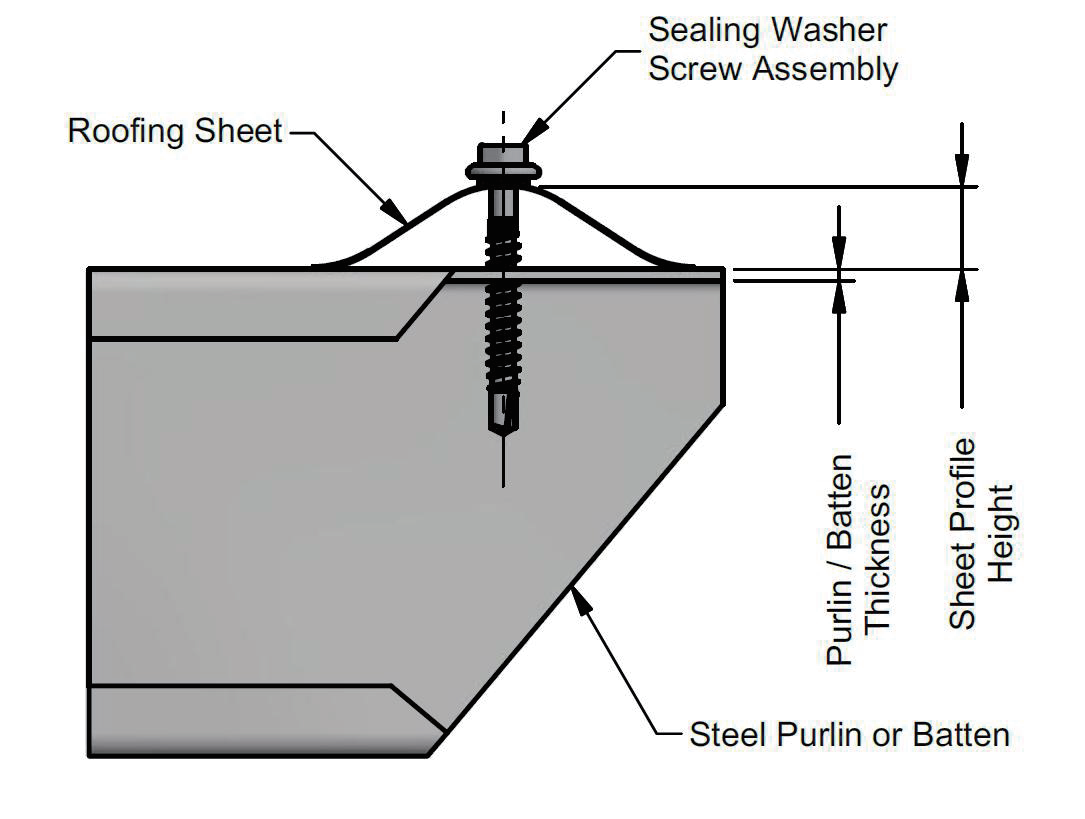
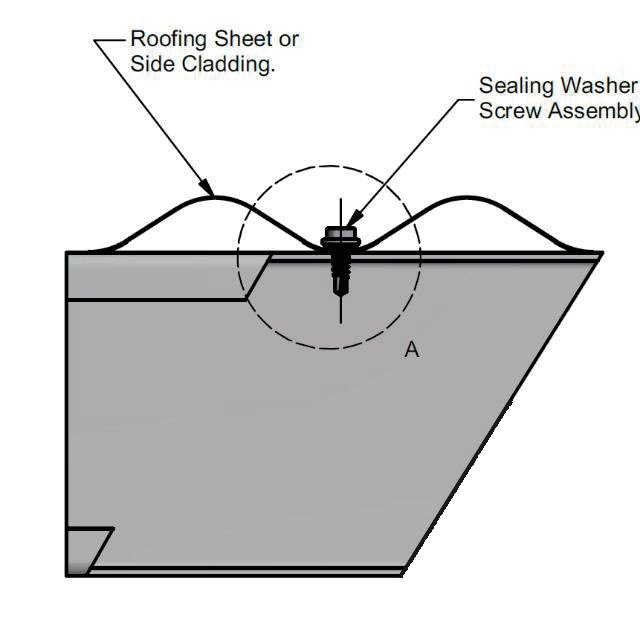
Crest fixing without insulation
Use the roof profile and support thickness to shortlist the length:
- GL should not exceed the roof profile height.
- EL should cover the profile height plus the purlin or batten thickness.
Self-drilling, self-tapping and stainless-body bi-metal fasteners for selected roofing, cladding, timber and steel details.
Identify how the hole is made and which material needs to carry the fastening thread.
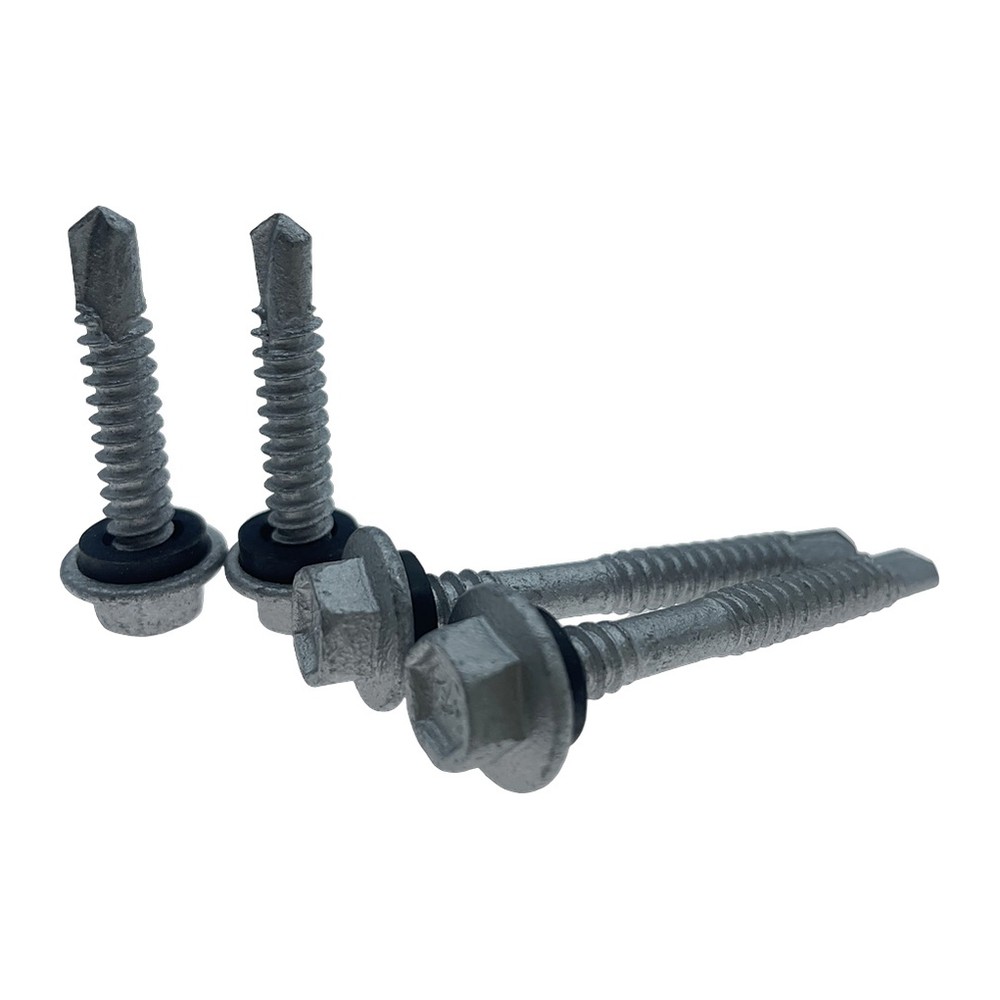
A hardened point drills the hole before the tapping thread engages the steel. Confirm the tested range for the selected point, diameter and steel grade.
Xem chi tiết →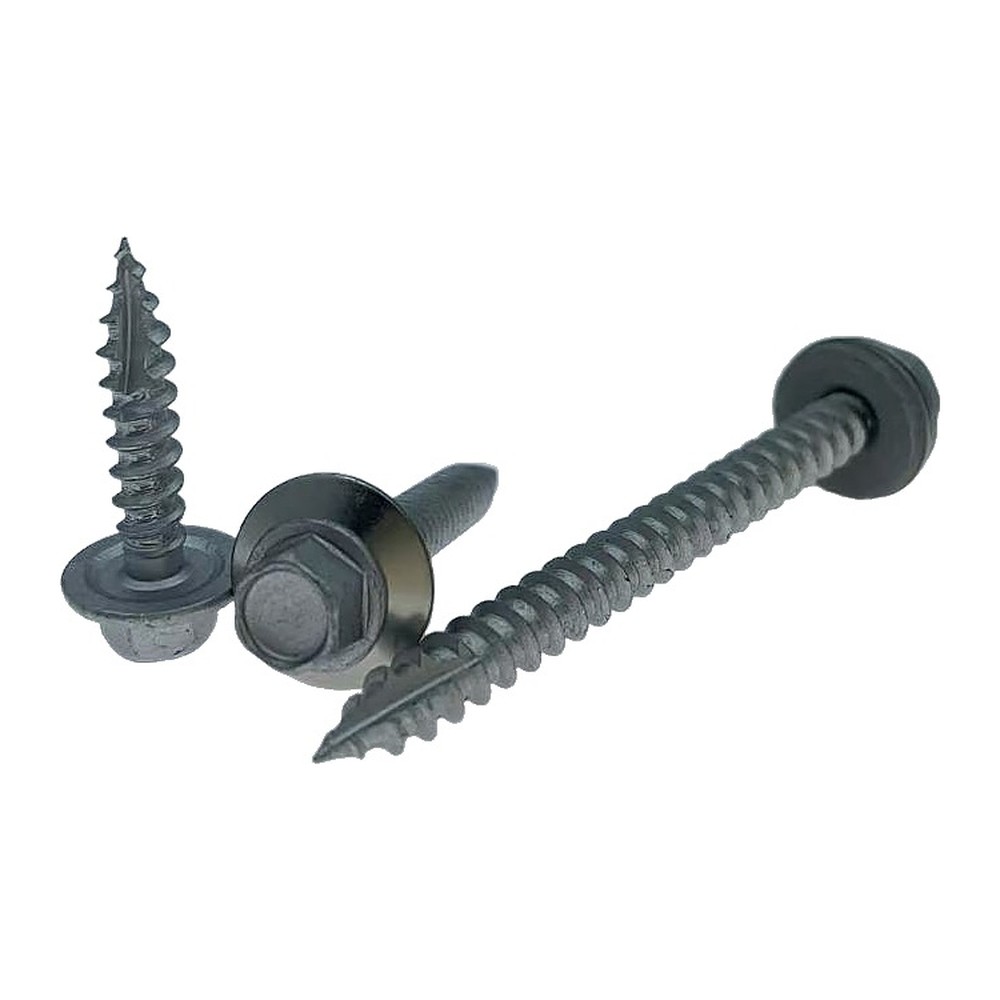
Tapping threads form their mating thread. Sharp or Type 17 point options need substrate-specific hole preparation and embedment.
Xem chi tiết →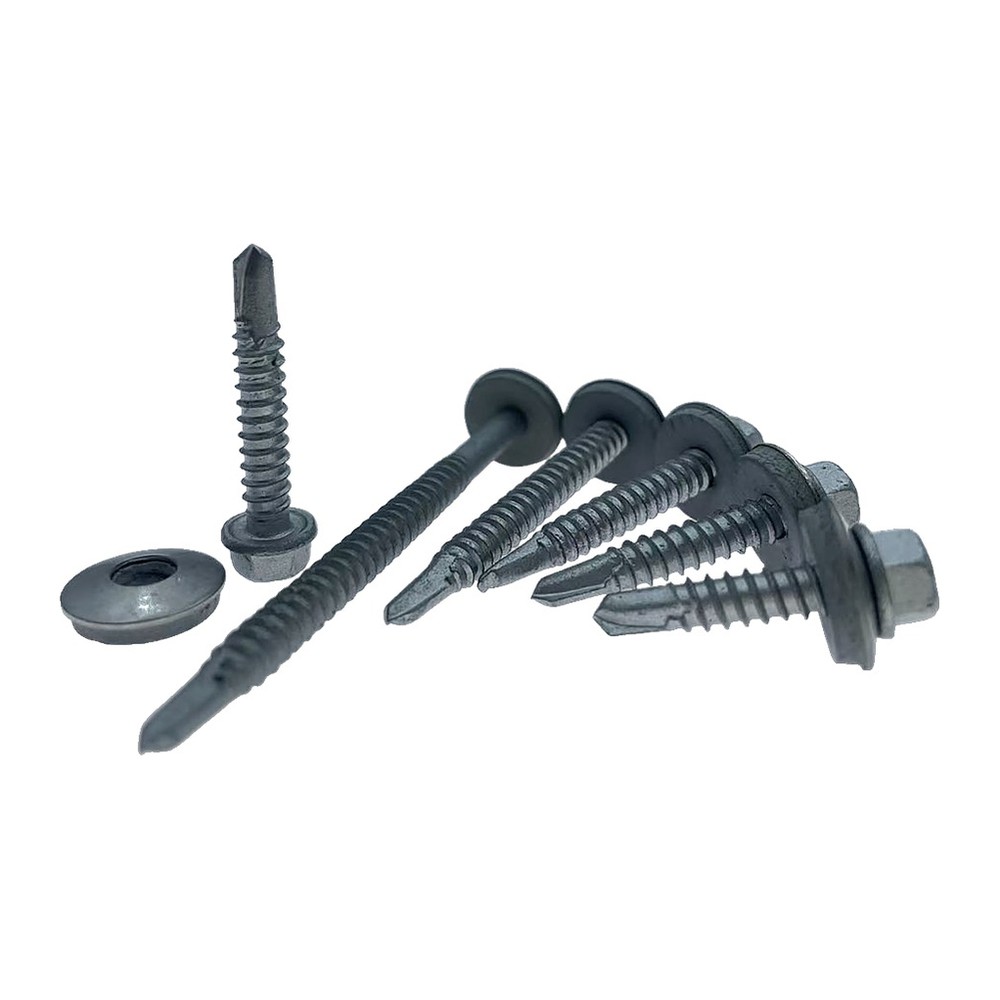
A stainless head and shank joined to a hardened point. Select the body, point, coating and washer together for the intended connection.
Xem chi tiết →| Series | Hole preparation | Main selection checks | Typical detail |
|---|---|---|---|
| Self-drilling | Selected point drills the steel within its tested range. | Steel grade and thickness, point, diameter, grip, coating and seal. | Panels and brackets to steel supports. |
| Self-tapping | Prepared pilot hole or point suited to the substrate. | Material, pilot hole, embedment, head and exposure. | Timber, trim and prepared sheet assemblies. |
| Stainless-body bi-metal | Joined hardened point drills the selected steel. | Body and point materials, joint evidence, drilling range and compatibility. | Selected external panel, clip and bracket connections. |
Point numbers and material names do not establish one universal drilling or load rating. Review the exact variant and supporting evidence.
A coating is one part of a fastener system. Match the screw body, protective finish, sealing washer, connected materials and site exposure to the project requirement.
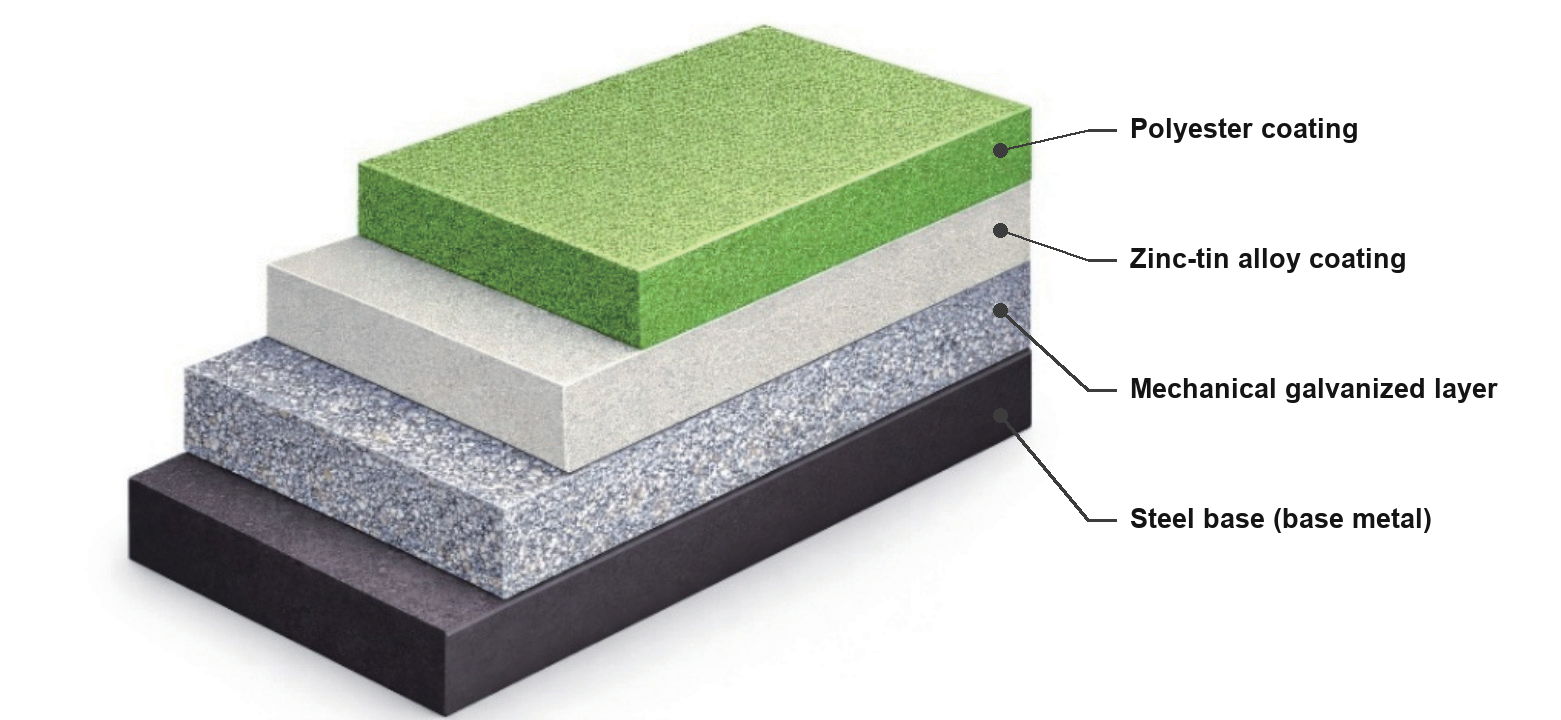
The referenced ITW guide pairs its Climaseal 3 finish with an EPDM sealing washer on specified screw variants. This is one product-system example, not a universal coating specification. Do not transfer another manufacturer's test results to a different product.
Read the materials and coating guide →Nominal length, grip length and effective length describe different dimensions. Use the correct head datum and include every layer between the screw head and supporting material.
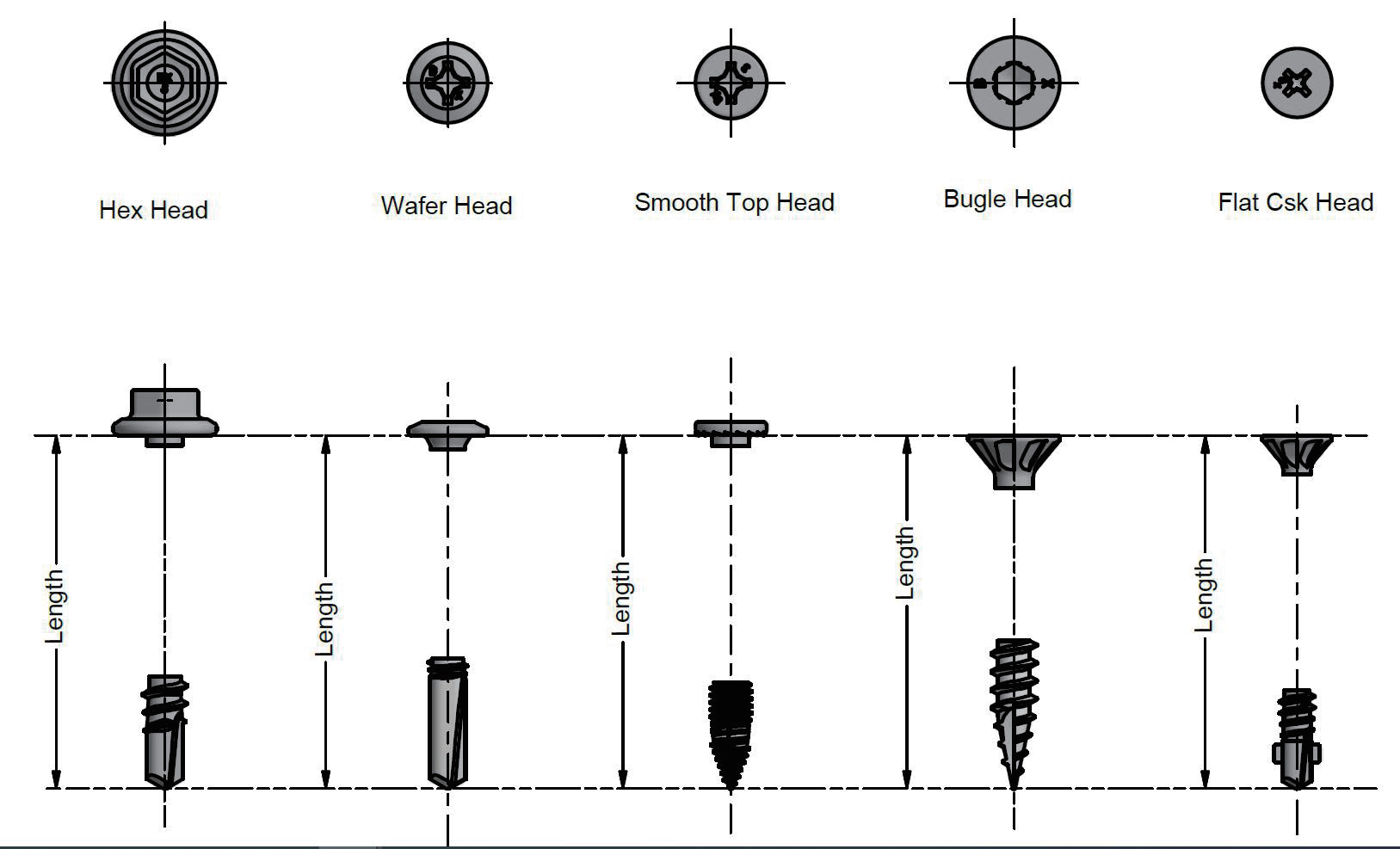
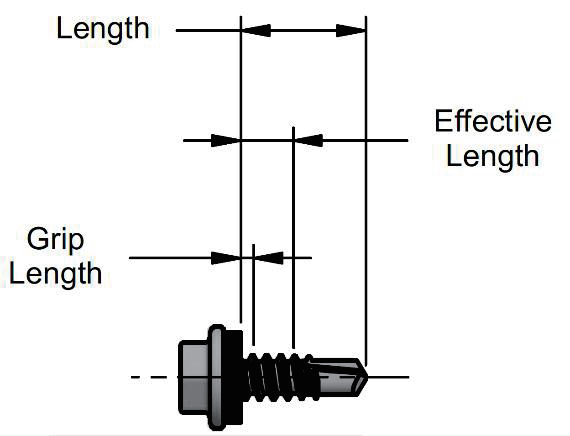
Use the roof profile and support thickness to shortlist the length:
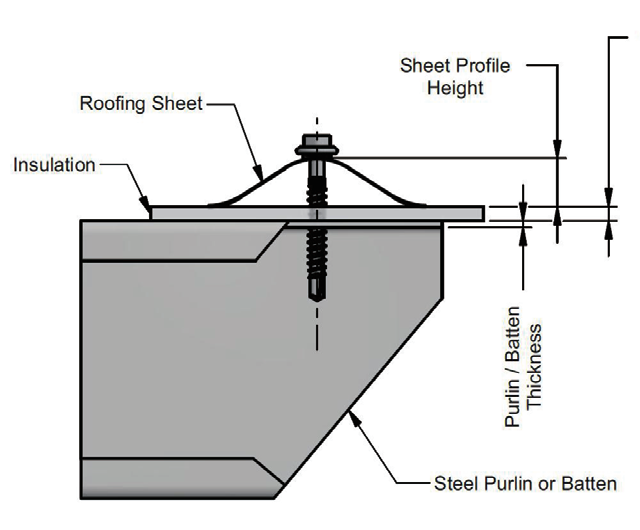
Account for the insulation thickness at its installed, compressed condition:
For a pan or valley fixing, use the cladding thickness rather than the roof profile height:
These are selection relationships, not a substitute for the roof-system specification. Confirm the exact screw point, drilling capacity, required thread engagement, washer compression, support material and approved fixing position before ordering.
Share the drawing or sample, connected layers, substrate thickness, exposure, required coating, quantity and destination so the quoted screw variant matches the intended installation.
Send the connection build-up and the requirements that need confirmation.
Nhận báo giá