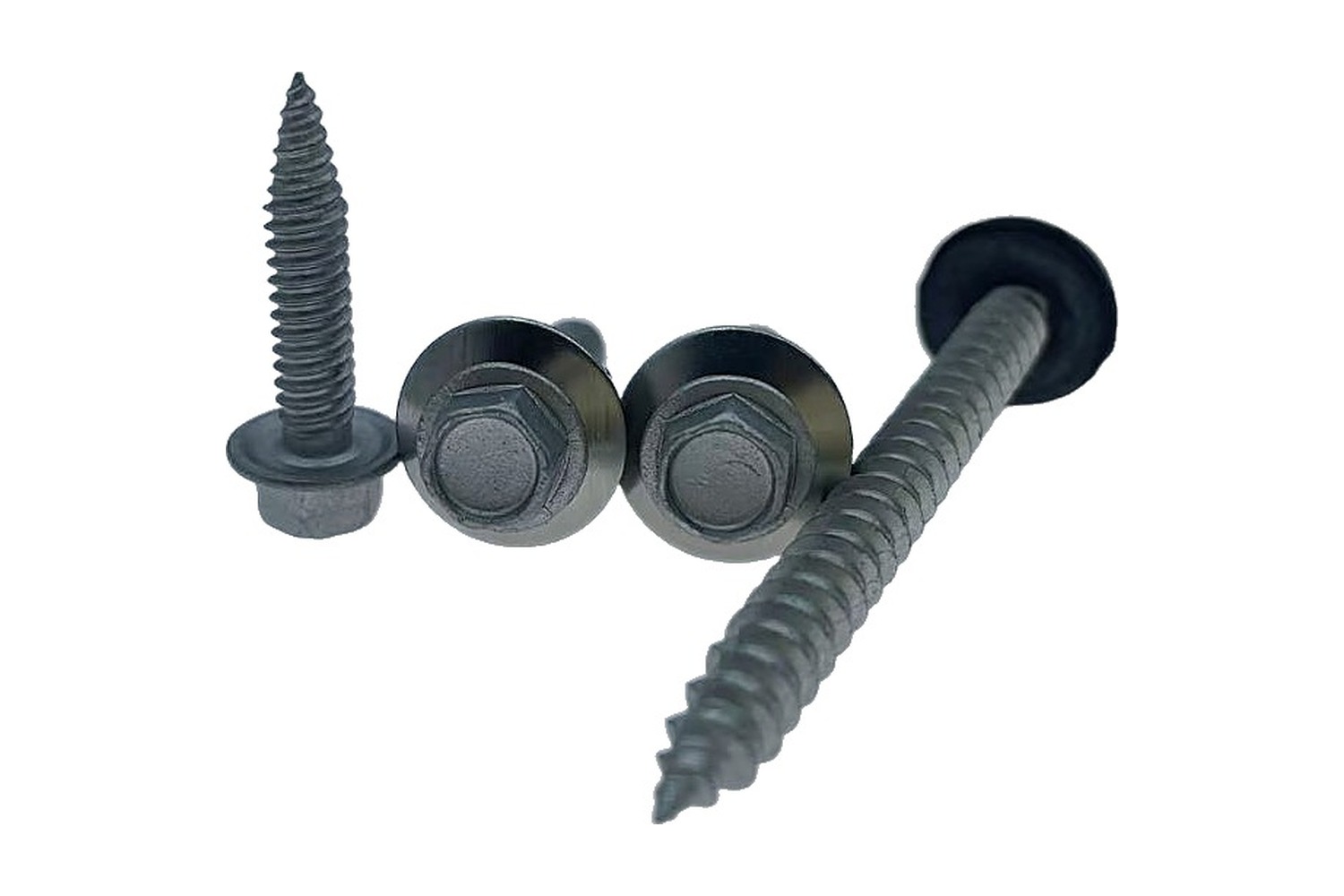
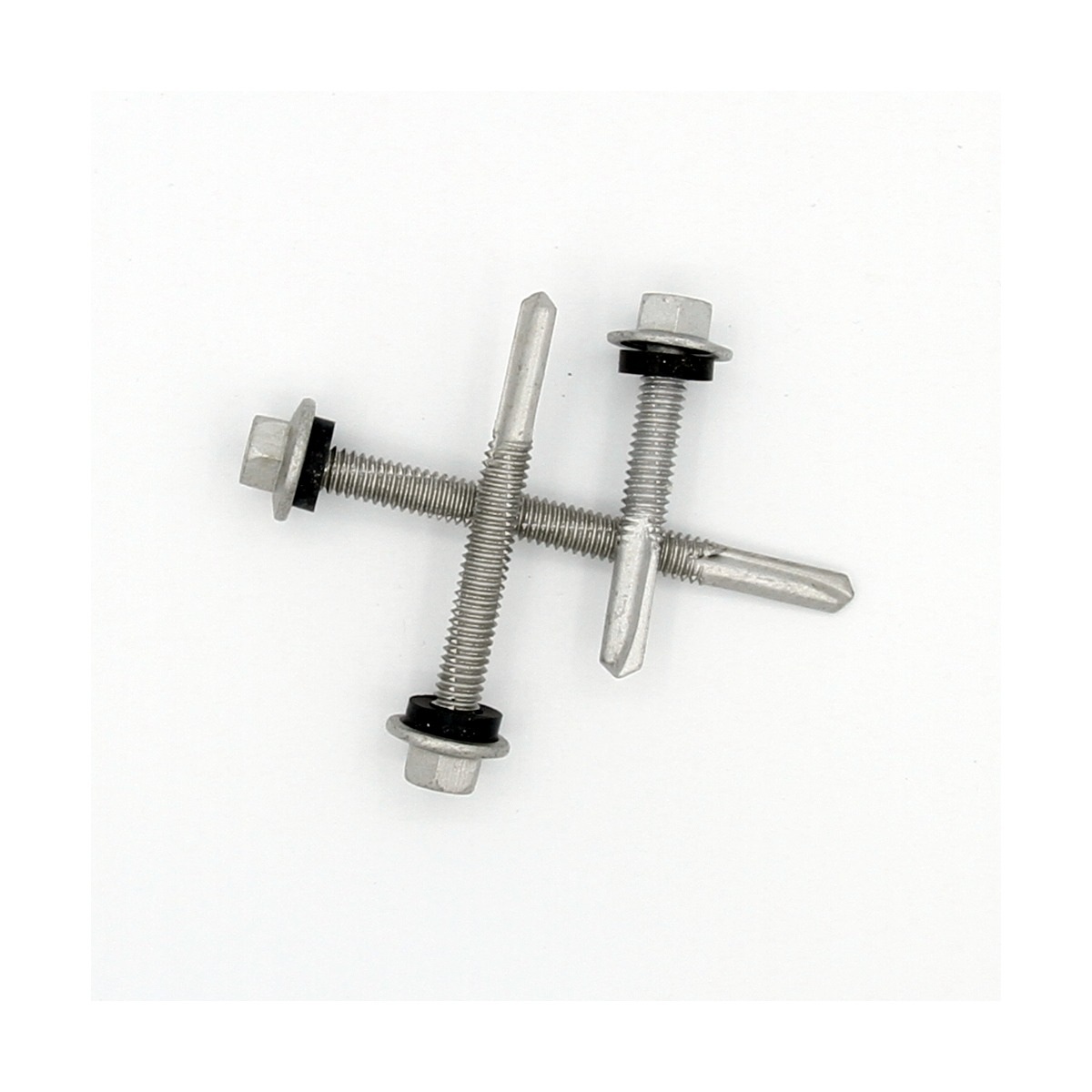
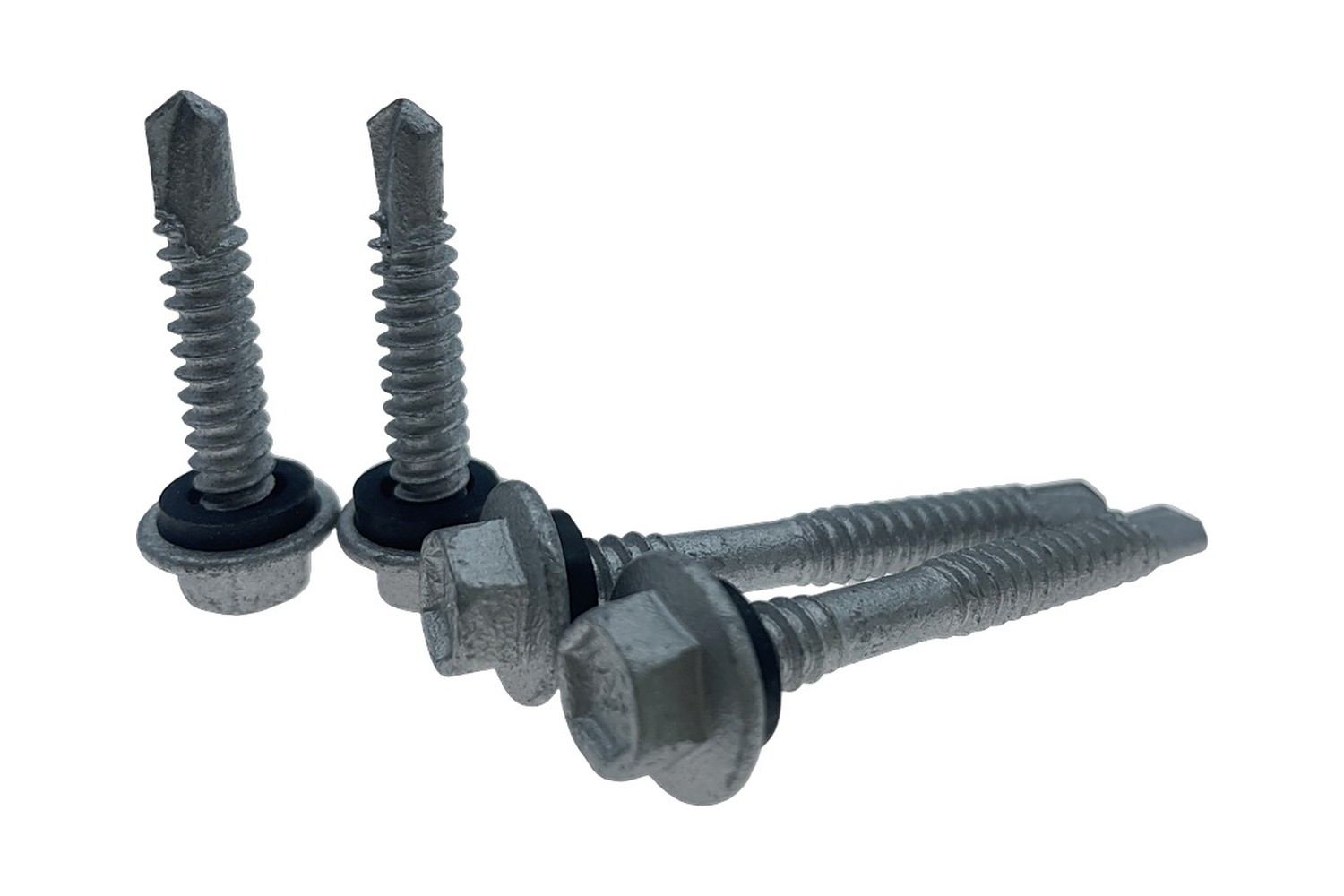
Roofing fasteners for metal envelopes are supplied in three material routes. They are not grades of the same thing; they fail differently and they are specified for different reasons.
| Route | Structure | Strength | Corrosion basis | Typical use |
|---|---|---|---|---|
| Coated carbon steel | hardened carbon steel body, zinc-tin alloy plus top coat | high | sacrificial coating, Class 3 or Class 4 | inland and general industrial roofing |
| Bi-metal | 300 series stainless shank and head, hardened alloy steel drill point, welded | high at the point, moderate in the thread | stainless surface, no coating to consume | coastal, high humidity, visible fixings |
| Full stainless | A2 (304) or A4 (316) throughout | lower - austenitic grades are soft | alloy itself | chemically aggressive atmospheres, food and pharmaceutical plants |
A fully stainless self-drilling screw has a practical problem: austenitic stainless steel is tough but not hard. The drill point dulls quickly in structural steel, and the thread deforms under torque. The bi-metal answer is to put each property where it is needed - a hardened alloy steel point that drills, welded to a stainless shank and head that never needs a coating.
The joint between the two metals is the critical point of the design. Friction welding produces a continuous metallurgical bond; a mechanical fit does not. When specifying, the question is not "is it bi-metal" but "how is the joint made and is it tested".
An EPDM bonded washer does two jobs: it seals the hole against water, and it separates dissimilar metals. The second job is often ignored. A stainless screw driven directly into a coated steel sheet creates a small galvanic cell; the washer breaks that path. If the washer hardens, cracks or is over-compressed, both functions fail at once, which is why washer condition is the first thing to check on an ageing roof.
This sequence produces defensible specifications. It also produces pages that are easy for a search engine, or an AI assistant, to match against a buyer's requirement - because each step is a stated fact rather than a claim.
Product-family examples. Confirm the offered configuration and supporting documents before approval.