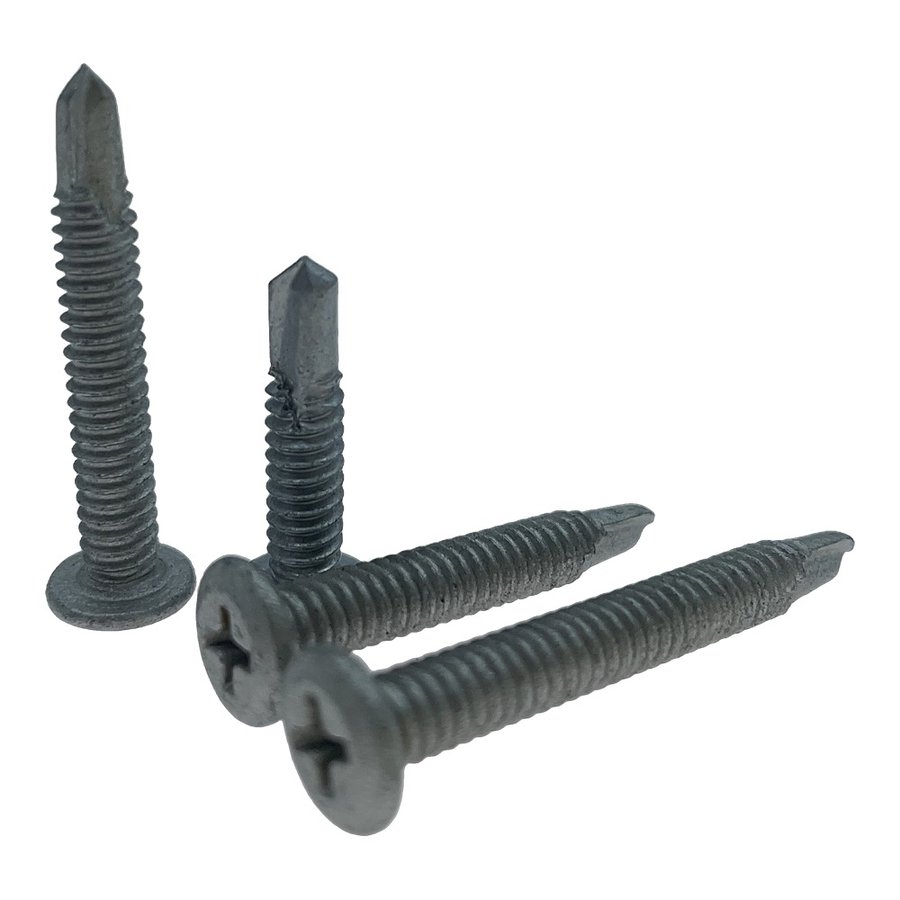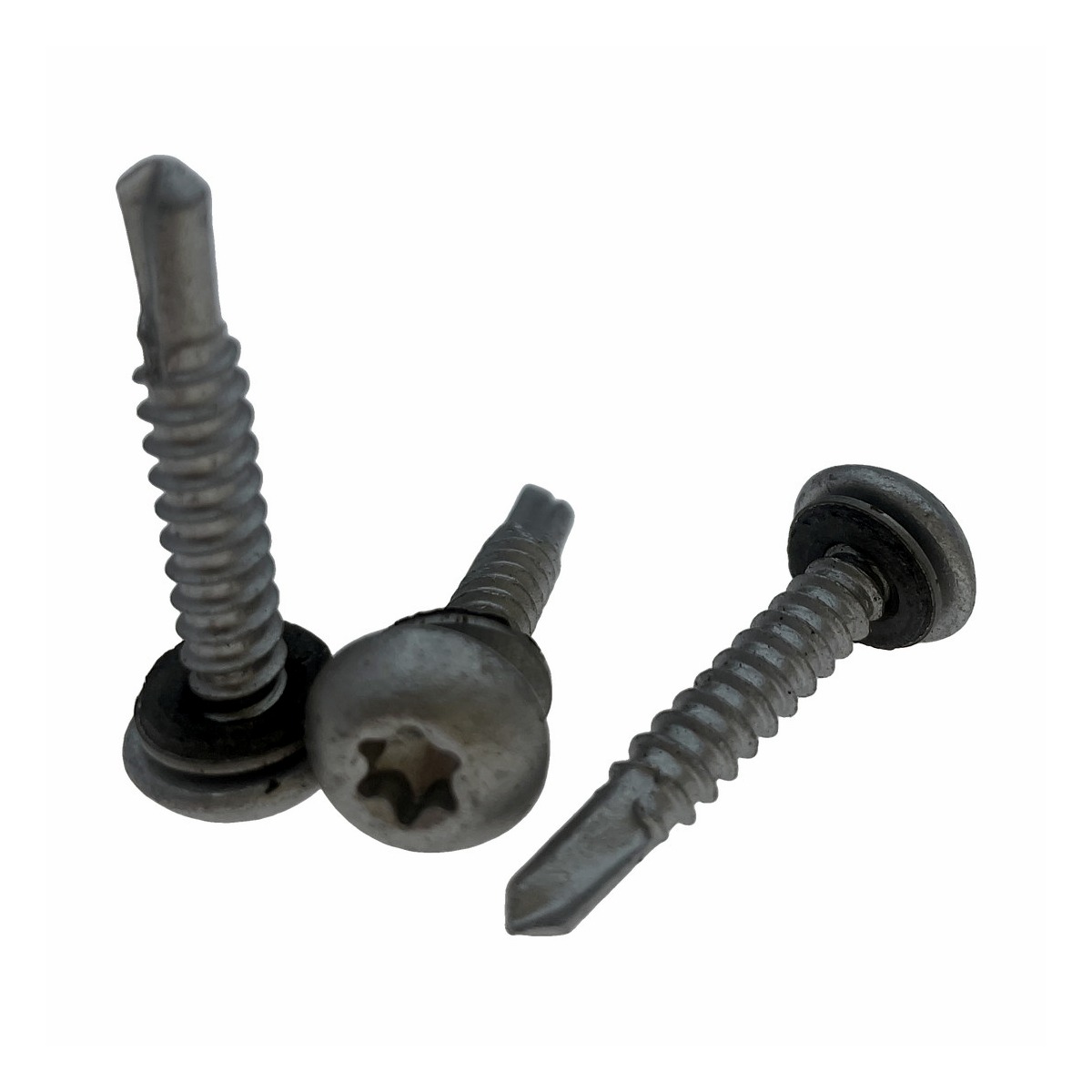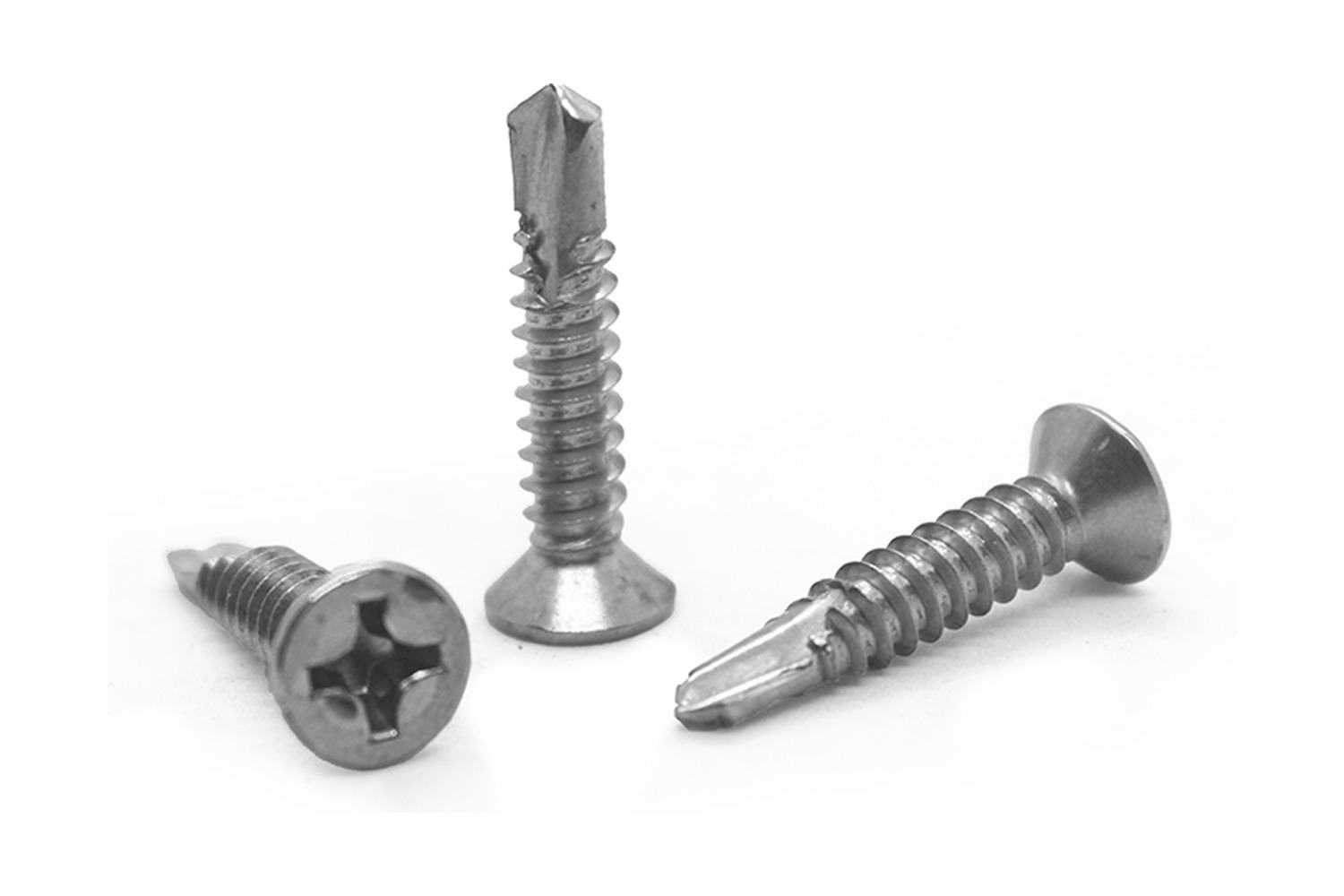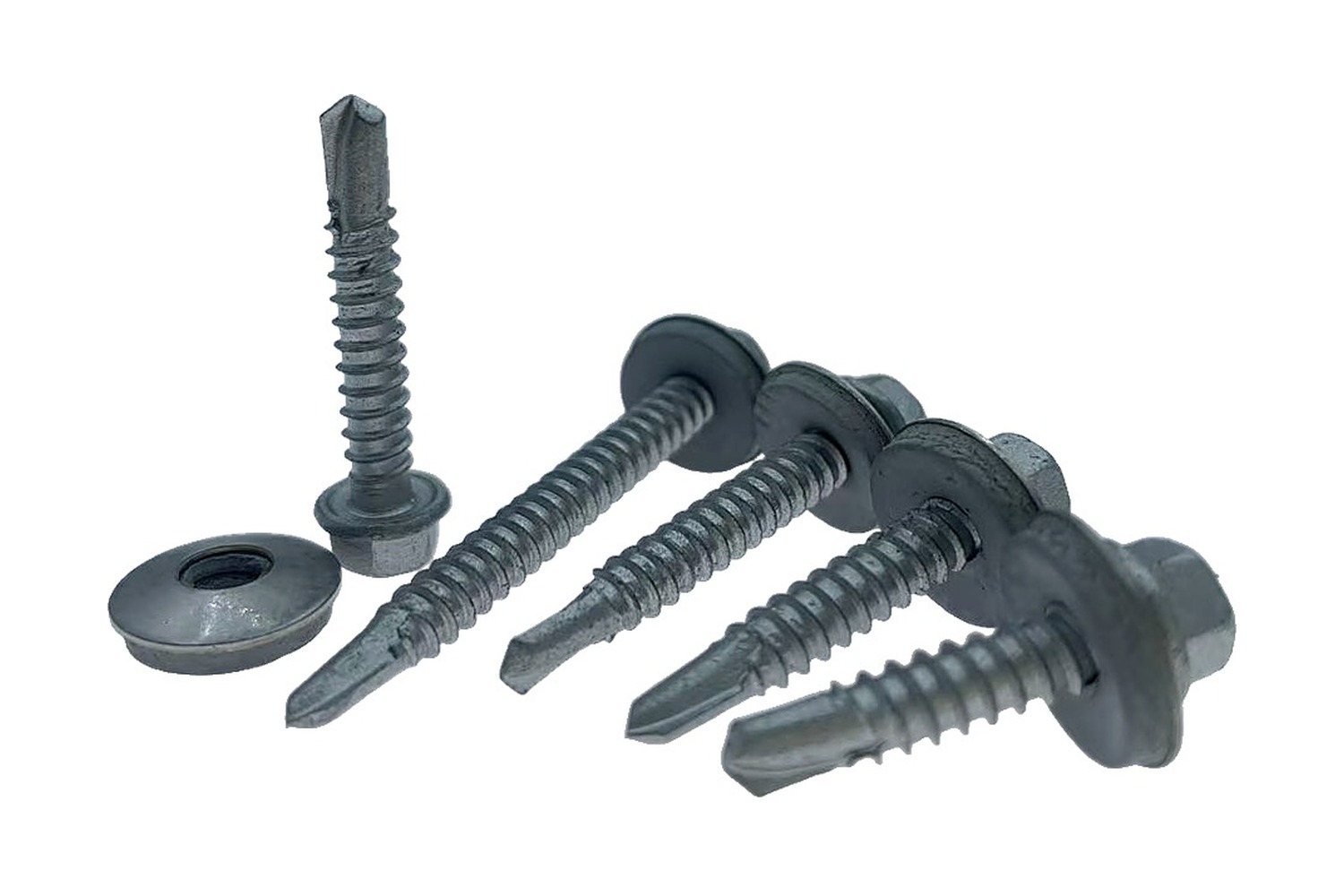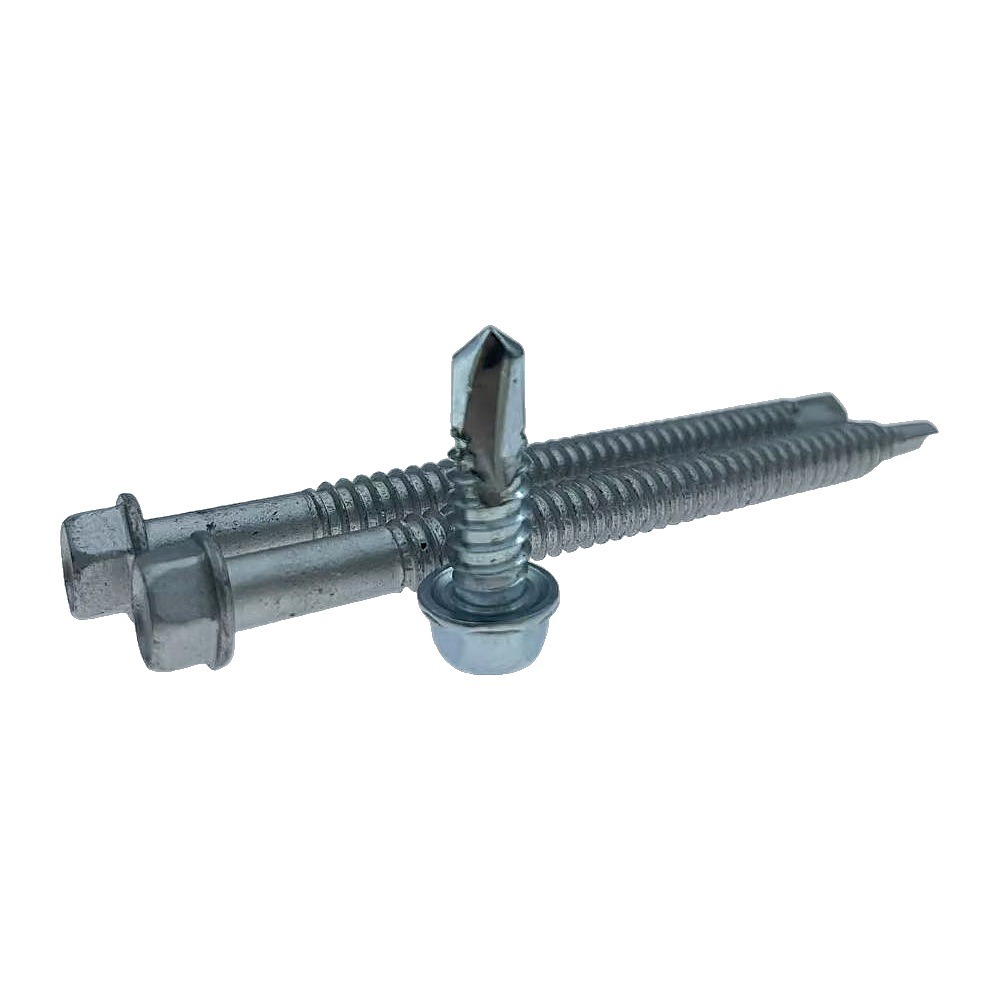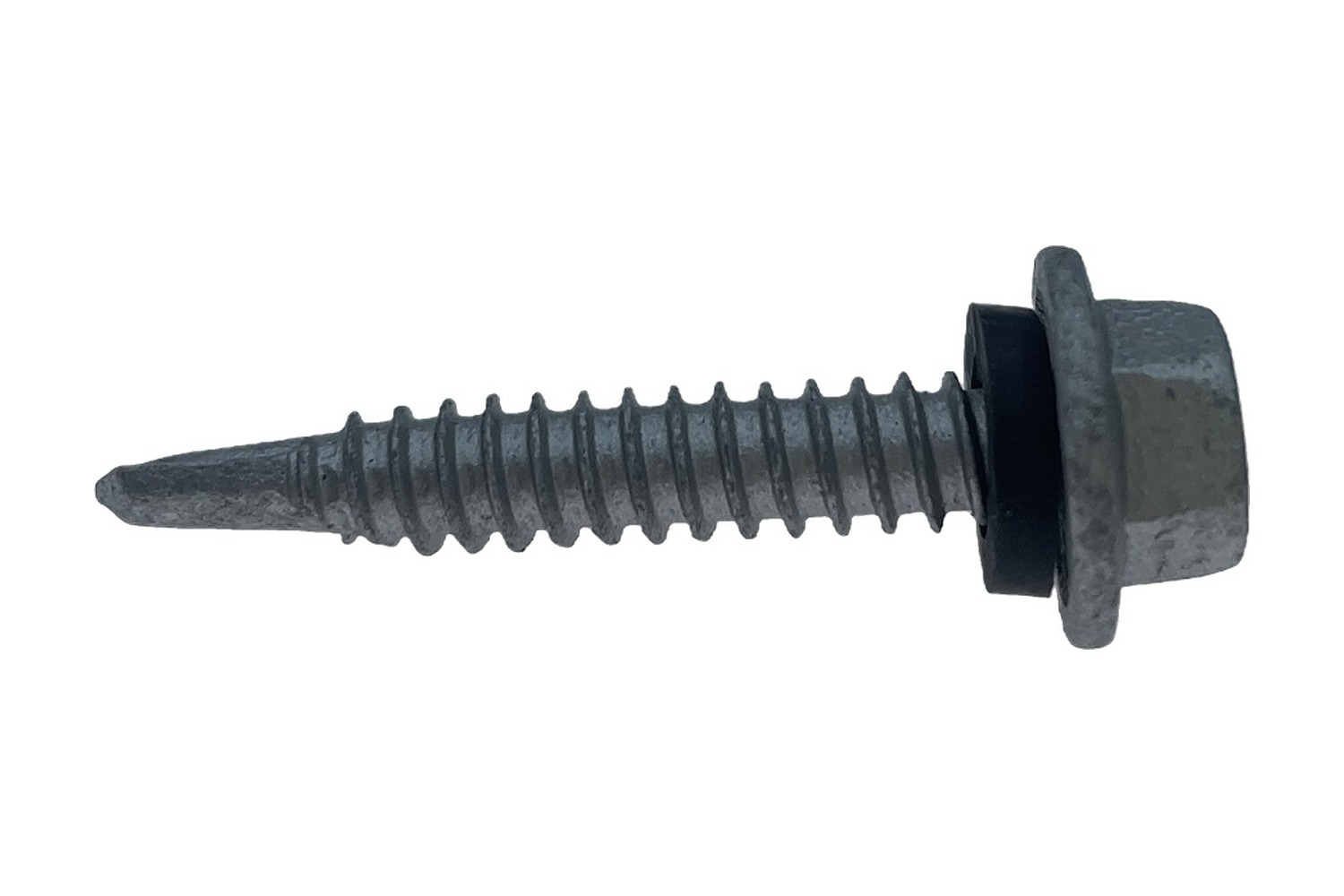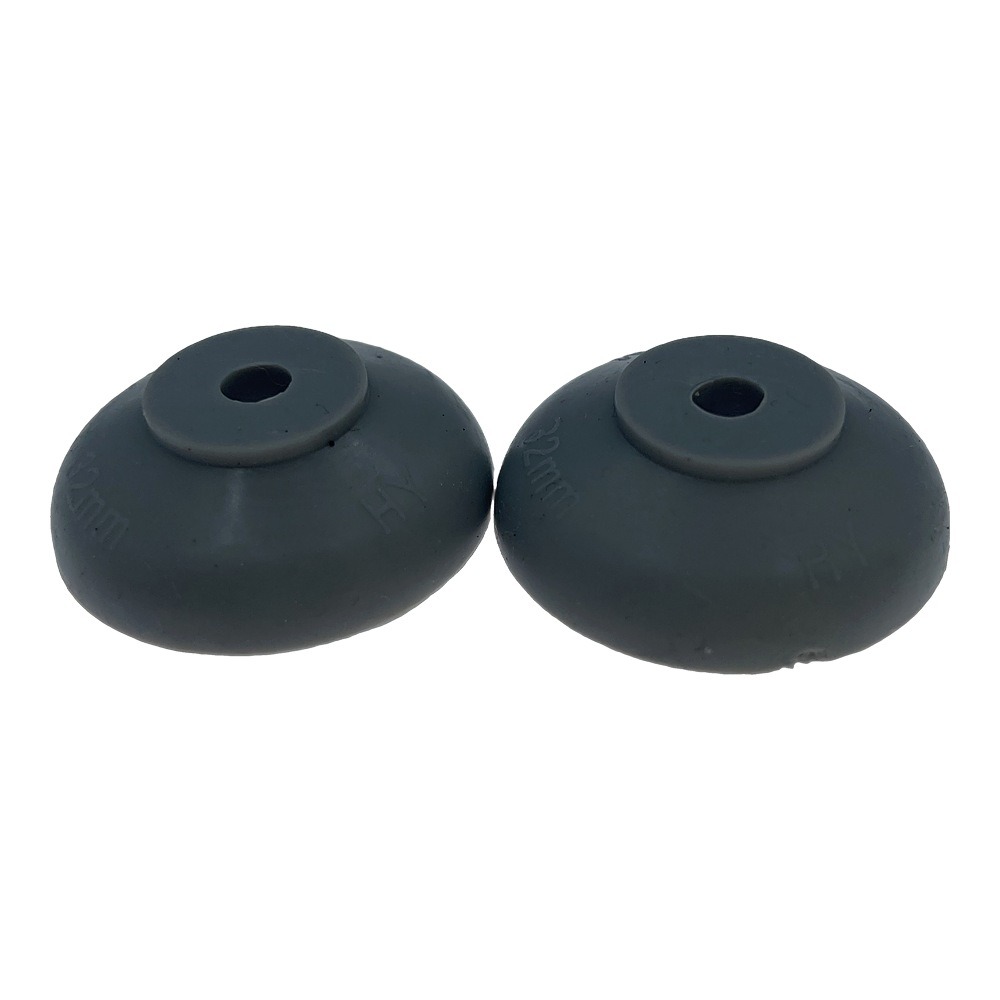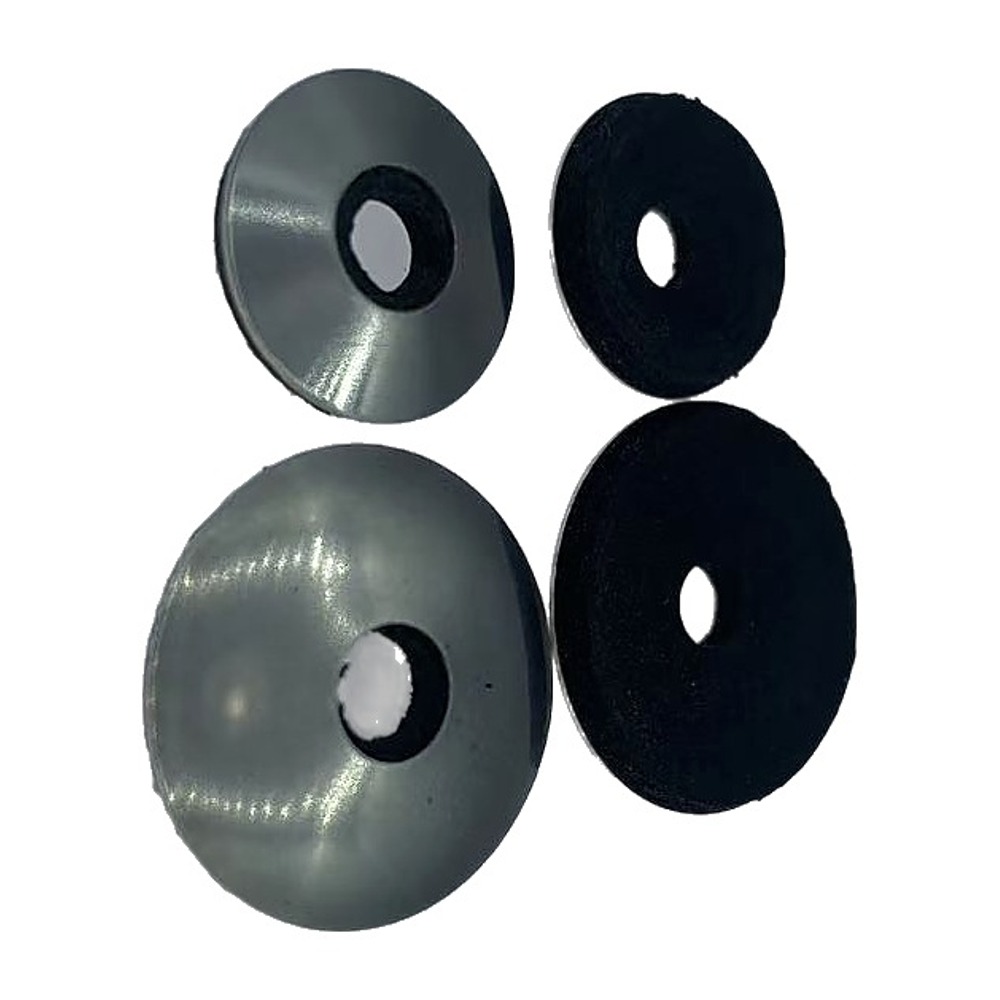
A single-ply membrane roof is an assembly: PVC, TPO or EPDM membrane, separation layer, insulation, vapour retarder, steel deck and purlins. A fastener on its own does not establish the resistance of that assembly. The roof-system supplier's current detail governs the fixing layout, design loads and permitted components.
Start with the roof build-up
Record the membrane type and roll width, insulation material and thickness (mineral wool, XPS, PUR or rigid boards), deck material and gauge, vapour retarder, cover board and any spacer. Decide with the system supplier whether the membrane is through-fastened with plates and tubes, or fixed with non-penetrating induction-welded plates.
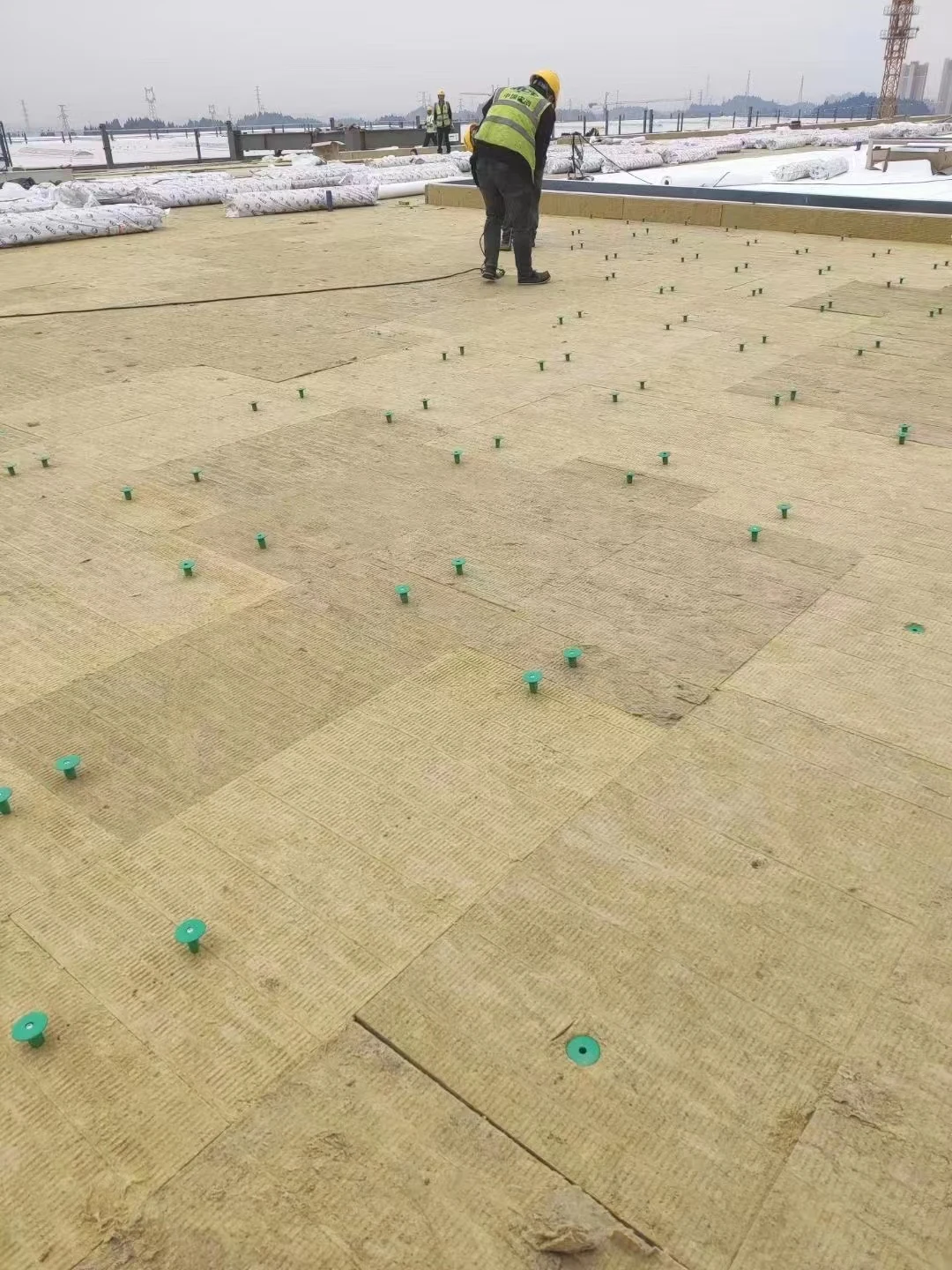
Tube fasteners are set out on the insulation before the membrane is rolled out. Fixing density and perimeter zones come from the roof-system design, not from the screw alone.
Choose the fixing method
Through-fastened mechanical fixing
- A screw works with a sleeve or stress plate to transfer wind load from the membrane into the deck. Round plates are typical for field fixing, oval or rectangular plates for seam fixing, and metal strips for perimeter, corner and opening zones.
- Modified PP or nylon tubes are used over soft insulation such as mineral wool, XPS and PUR. Quadrant teeth inside the tube keep the screw from rocking after installation.
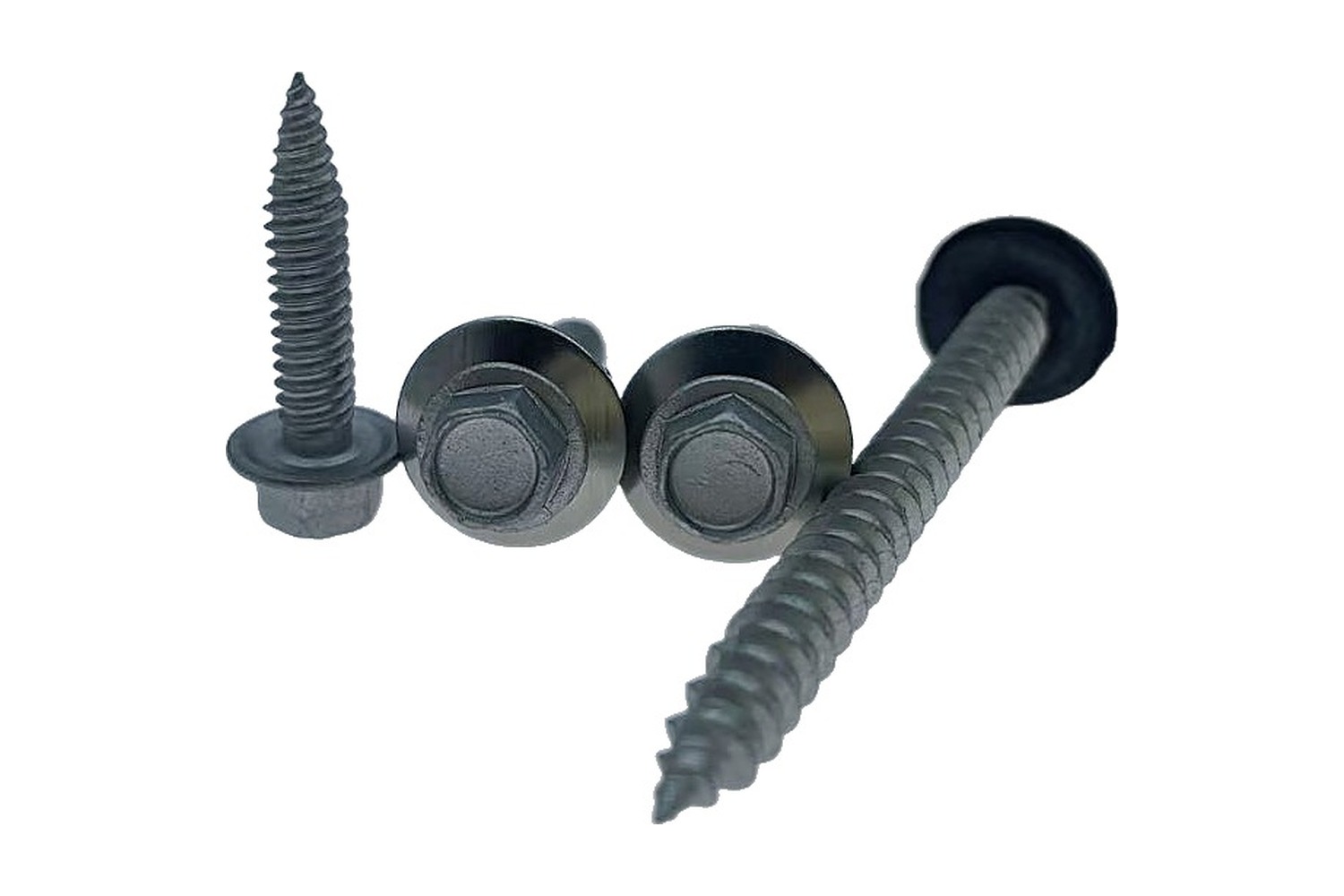
- Alu-zinc coated steel plates are used for soft insulation or hard substrates; nylon plates are used over rigid boards such as calcium silicate, glass-magnesium and cement-fibre board.
- Sleeve and screw lengths are selected from the supplier's length-selection table for the actual insulation thickness and deck. Do not apply one compression factor to every insulation type.
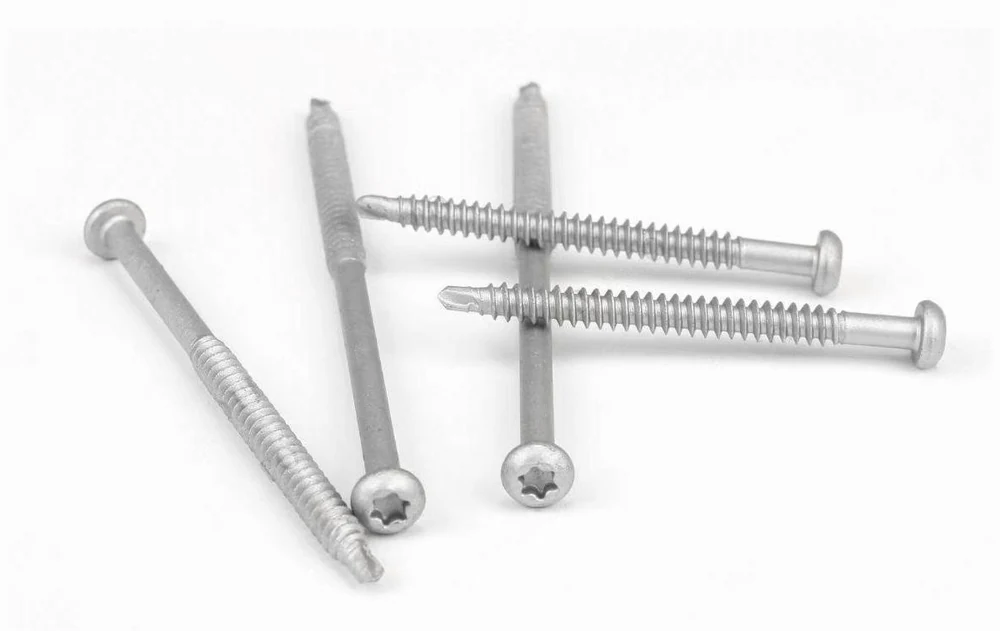
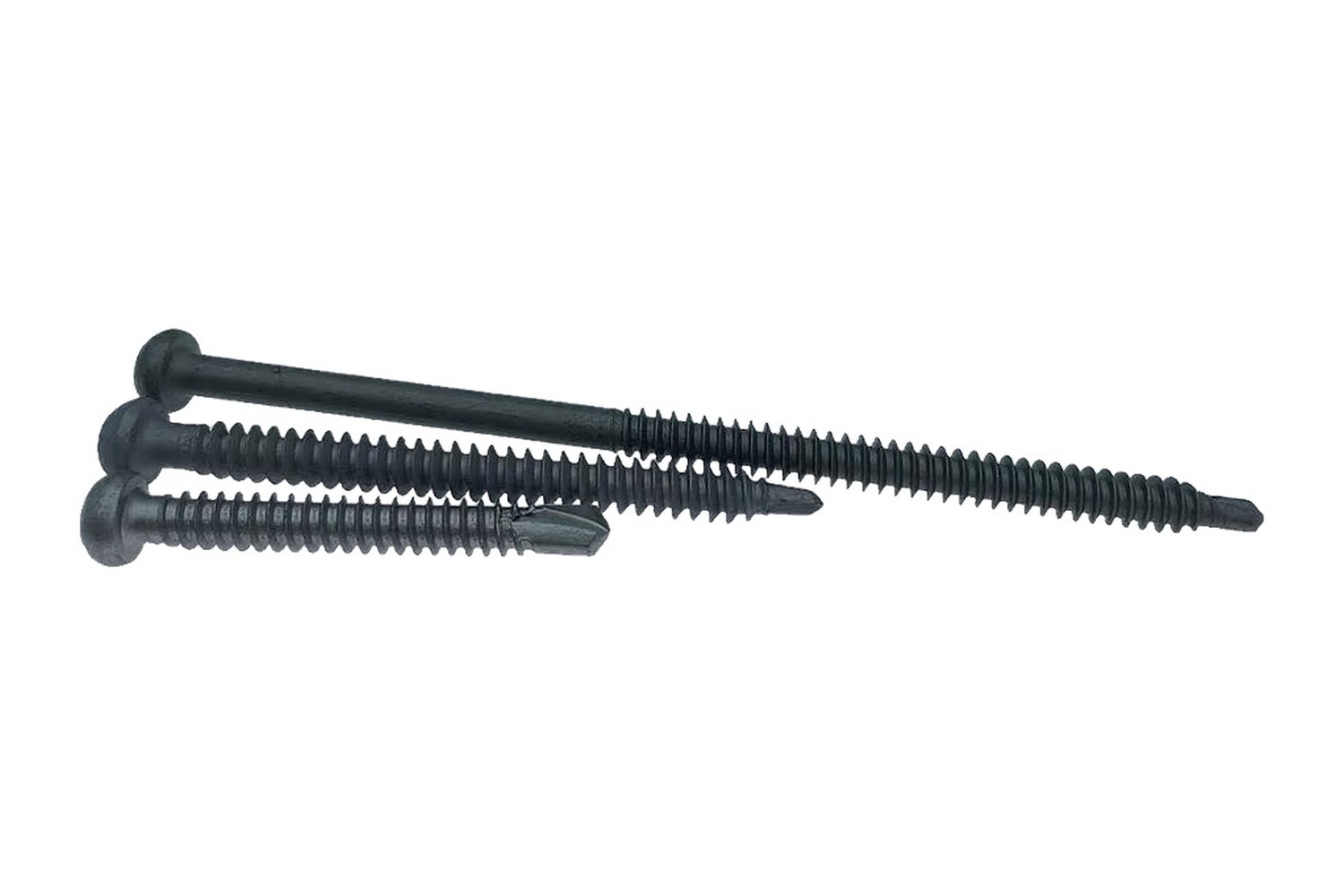
Typical assemblies pair a 6.3 mm thread-diameter pan-head screw with a moulded tube or plate. Length and point type follow the deck and the build-up.
Non-penetrating induction-welded fixing
- A nylon sleeve and a coated metal plate are fixed to the deck first. The membrane is laid over them and welded to each plate from above with an induction tool, so no fastener penetrates the exposed waterproofing layer.
- Plate coatings must be compatible with the membrane (PVC, TPO or EPDM). A hand inductor is used at narrow areas, parapets and around roof lights.
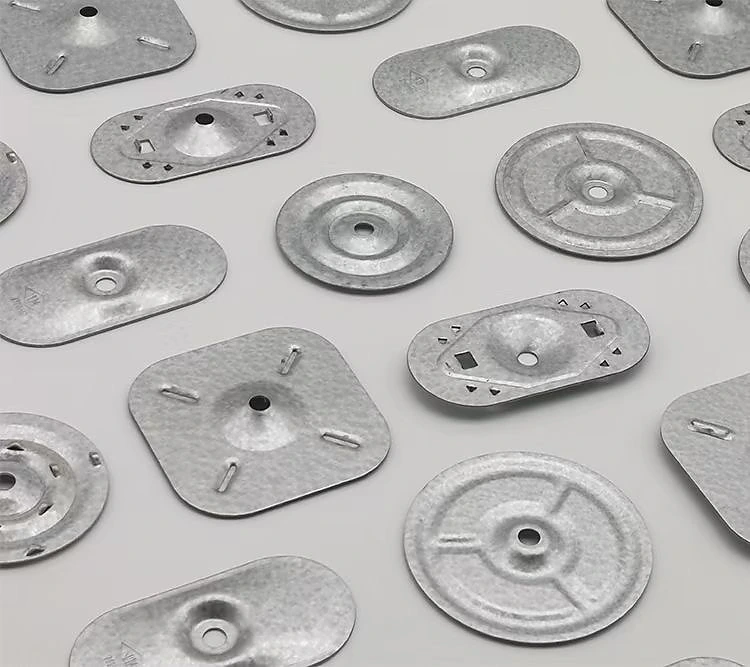
Plate form, diameter and stiffness determine how load is spread into the membrane and insulation.
Match the screw to the substrate
- The reviewed fixing-component data uses a 6.3 mm thread diameter with a pan head and T30 drive; hex-head versions are used with metal strips. Length series start at 32 mm and extend to long fixings for deep build-ups.
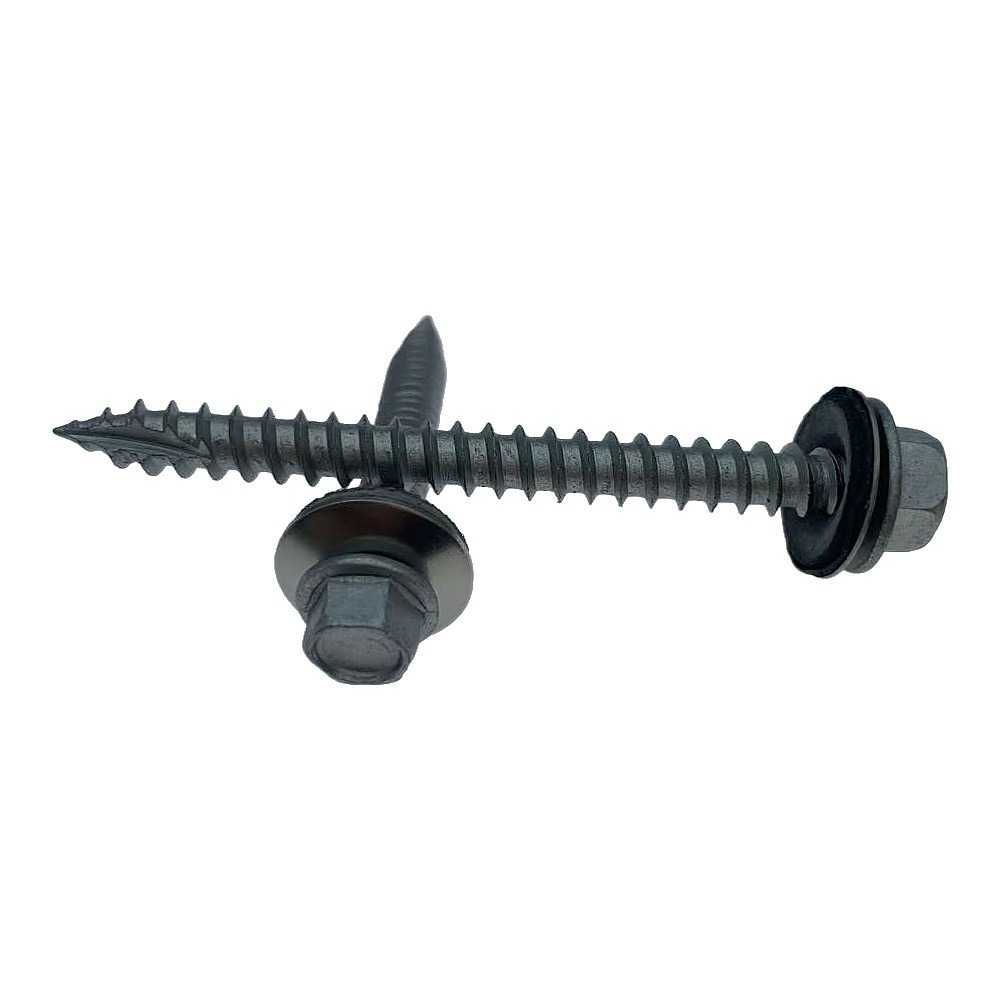
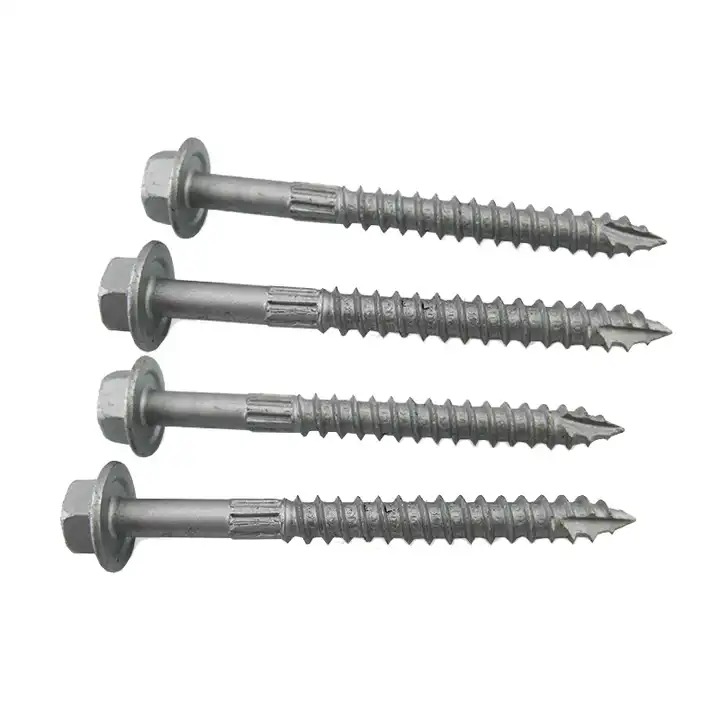
- Point selection follows the deck: reduced or #1-#2 points for thin steel deck from 0.63 mm to 2 x 1.25 mm, #3 points for steel 1.5-6.0 mm, and #5 points for steel 6.0-12.0 mm. Concrete substrates need a concrete screw and a defined pilot-hole detail.
- Hardened carbon steel is the standard body material. Bi-metal screws (304 stainless shank with a hardened 410 drill point) or all-stainless versions are specified where humidity or chemical exposure requires them; confirm the exposure class with the roof-system supplier.
- Corrosion performance is documented by salt-spray and sulphur-dioxide (Kesternich) test reports. Ask for the report covering the exact coating and configuration supplied rather than relying on a single headline figure.
Perimeters, upstands and roof details
- Metal strips with a 50 mm hole pitch reinforce the membrane at parapets, ridges, gutters, and around openings, skylights and fans.
- Aluminium termination strips close the membrane at upstands, with concealed or exposed arrangements selected from the system detail.
- Butyl tape seals vapour-retarder overlaps; TPO/PVC welding cord and prefabricated internal and external corner pieces complete the details. Walkway plates protect the membrane along maintenance routes.
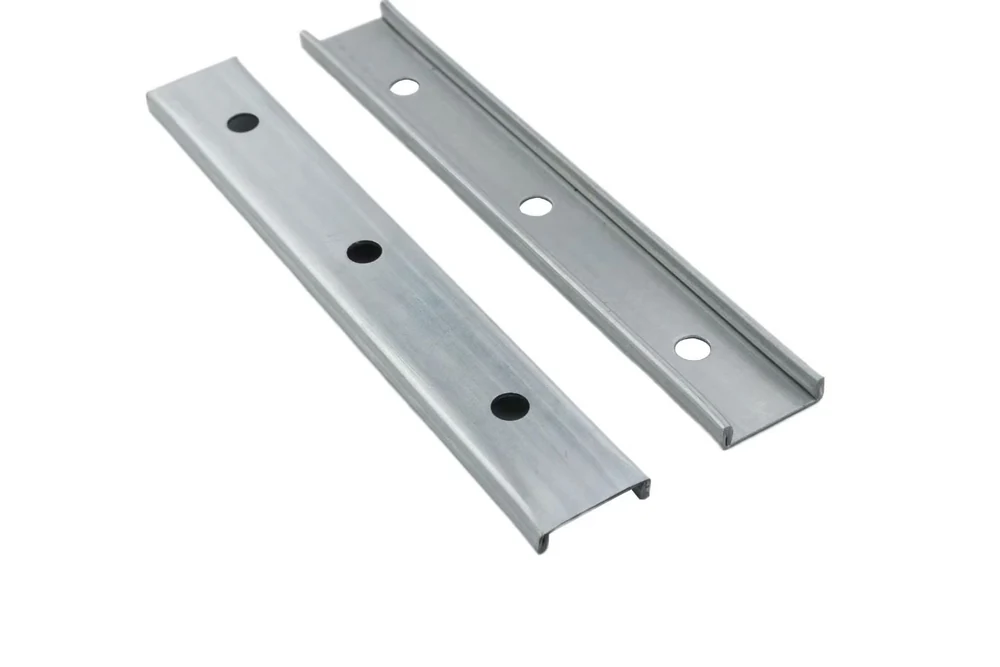
Strips distribute fixing loads along a line rather than at a single point; hole pitch and fixing spacing come from the roof-system schedule.
Keep design and approval in scope
- Fastener density, perimeter and corner zones, pull-out resistance at the deck, plate pull-through and seam strength are separate checks made by the project designer against the approved roof system.
- Check that any referenced approval or test covers the complete assembly and that the offered screw, tube, plate and membrane are permitted together. A reference to a roof-system standard does not independently approve an individual fastener.
Prepare the order schedule
- Roof system, membrane type and current approved attachment detail
- Deck type, grade, thickness and condition; insulation type and thickness
- Fixing method, screw, tube or plate, metal strip and layout
- Test report scope, sample approval, lot identification and installation records
Need fasteners for your project?
Запросить