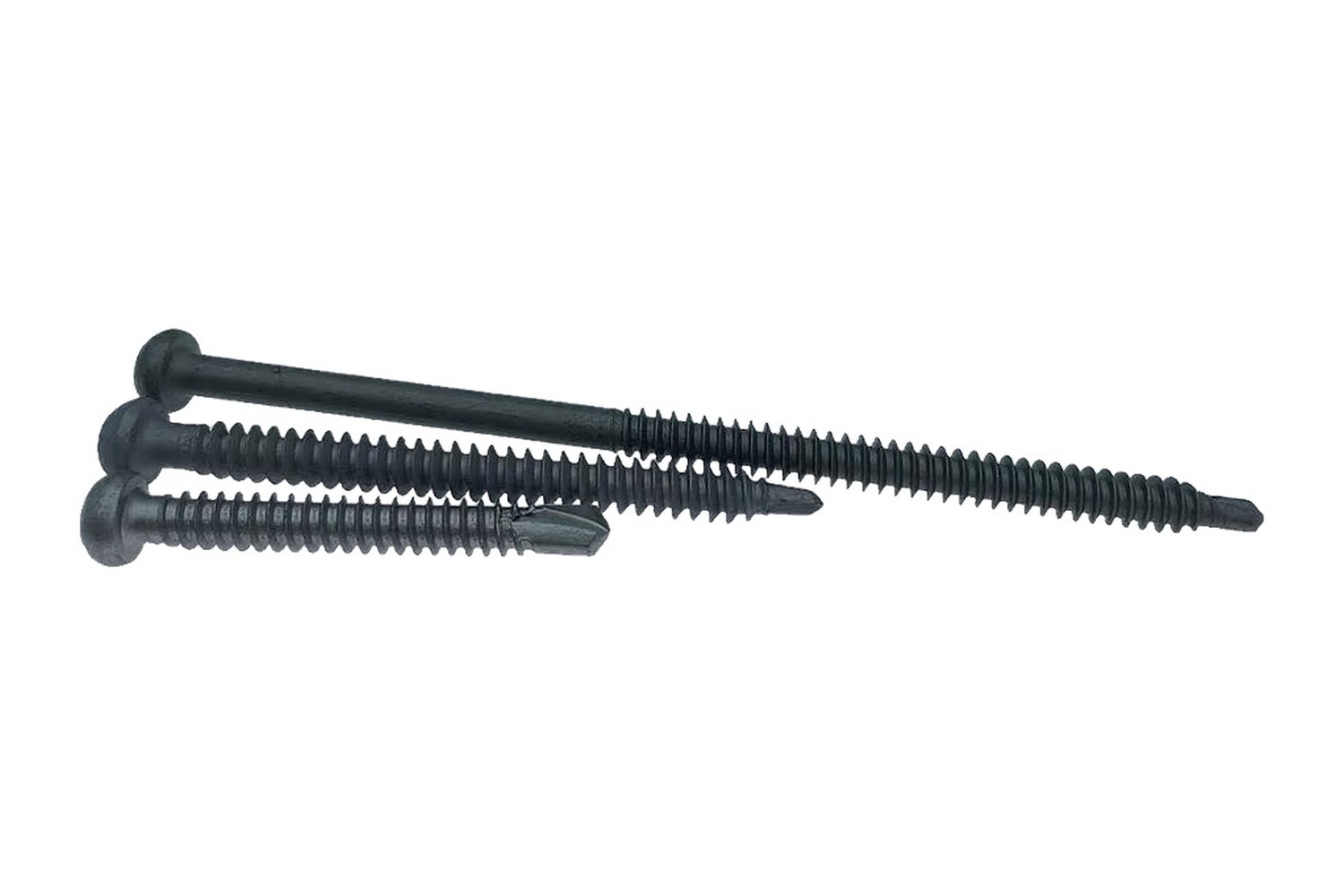
A flexible or single-ply membrane roof is not fixed the way a metal roof is fixed. There is no sheet to clamp under a washer: the membrane is loose-laid or partly bonded, the insulation sits above the deck, and the fasteners work through the insulation build-up into the purlin below. The screw's job is to reach the purlin through that stack, hold the insulation and the membrane against wind uplift, and do it without tearing the membrane or crushing the insulation where the load is applied.
That is why the fastener looks different from a roofing screw. The thread is a self-tapping thread for thin steel rather than a self-drilling point, the head carries a stress plate instead of an EPDM washer, and the length is chosen from the insulation thickness rather than from the sheet profile.
| Part | What it does | What to check |
|---|---|---|
| Screw shank | Reaches the purlin through the insulation | Diameter 5.5 or 6.3 mm, length from build-up |
| Point | Taps the purlin web without pre-drilling | Needle point for thin steel, self-drilling for 3 mm and above |
| Stress plate | Spreads clamp load over the insulation face | 25-29 mm plate for standard details |
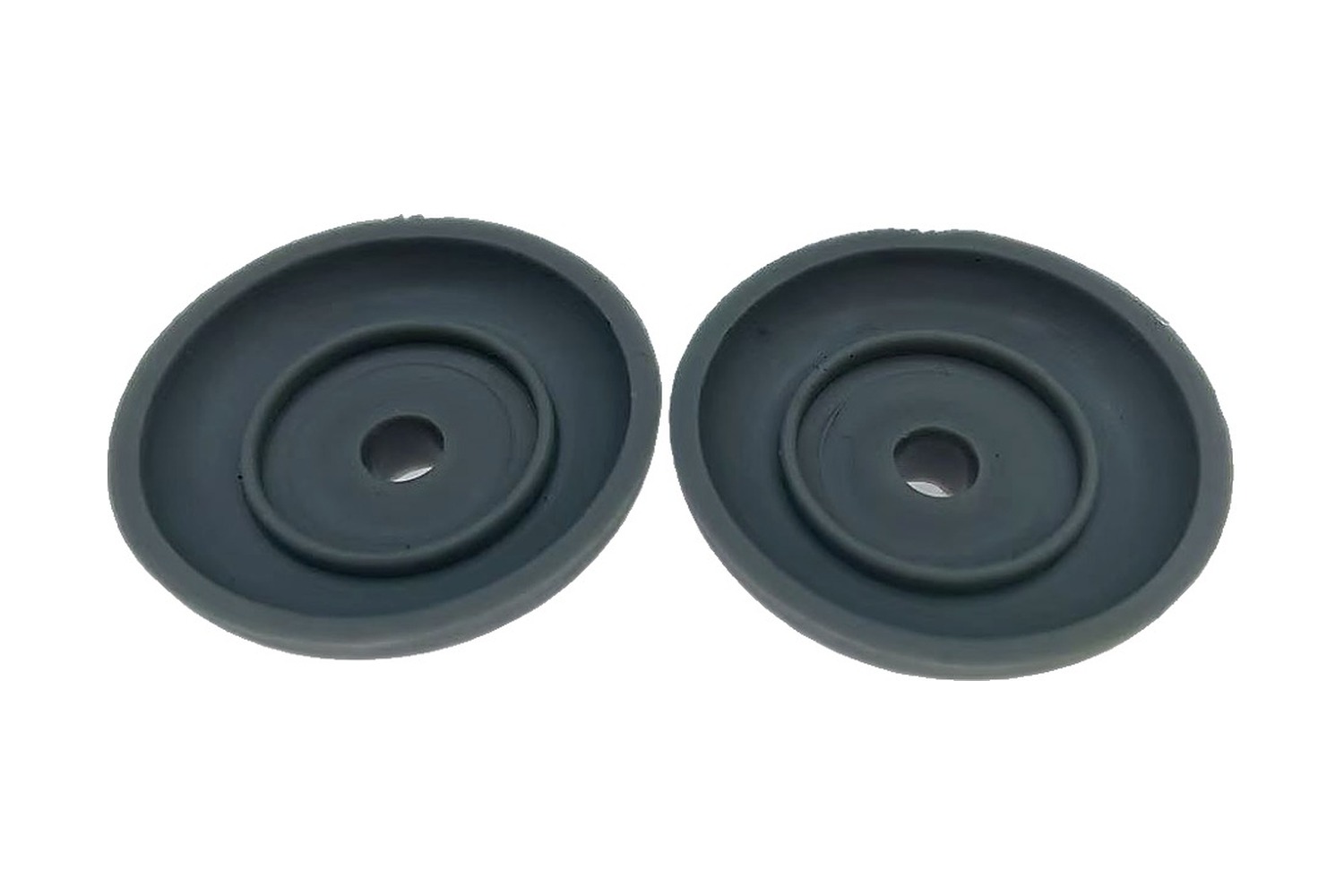
| Washer | Seals the plate to the membrane where the fixing is exposed | Bonded, membrane-compatible compound |
| Thread | Holds in the purlin, not in the insulation | Coarse self-tapping thread, 25 mm minimum engagement |
The plate is not an accessory. A screw driven straight through a membrane without a plate concentrates the whole uplift load on the washer diameter, and the membrane tears at the head long before the fastener reaches its pull-out value.
TPO, PVC and EPDM membranes are all fixed with the same family of fasteners, but the washer compound has to suit the membrane it touches.
If the fixing is going to be covered by membrane - the usual detail on mechanically attached systems where the next roll is welded over the plate - the washer question disappears and the plate profile becomes the critical item, because it must sit flat under the weld.
The screw length is the sum of the insulation thickness after compression, the membrane thickness, and the thread engagement in the purlin. Two practical points decide the result.
First, insulation compresses. A 100 mm board does not stay 100 mm under a plate; most systems assume 10-20 percent compression at the fixing, and the manufacturer's table usually quotes the compressed value. Second, the thread engagement in the purlin should be at least 25 mm on a thin purlin web, and at least three full threads must protrude beyond the far face of the steel after the point has passed through.
On a 1.5 mm purlin web, a 25 mm engagement is more than the web thickness can offer in one pass, which is why purlin tail screws are usually specified with a needle point that pierces and taps rather than a drill point that removes material.
Uplift pressure at the corner and edge zones of a membrane roof is several times the field pressure, so the fixing density and the plate diameter change between zones. To run that calculation - or to have the system supplier run it - you need to supply four things:
With those four numbers the pull-out value per fastener can be matched to the required load per square metre, and the spacing follows. Fixing density quoted without them is a guess.
Membrane roofs are inspected after the first heating season and after any storm event. Two failure patterns account for most repairs: fasteners that were over-driven at installation, leaving the plate dished and the seal broken, and fasteners that were under-driven, leaving the plate loose enough to abrade the membrane from below. Both are visible from the surface as a ring or a shadow around the plate.
When a fastener is replaced, use a new plate and a new washer. A compressed washer does not reseal and a dished plate does not flatten again.
Can I use a standard roofing screw with an EPDM washer for membrane roofing?
For exposed fixings on a thin membrane detail, sometimes - but the washer diameter is usually too small and the drill point is the wrong tool for a purlin web. A purlin tail screw with a stress plate is the correct component.
How many fasteners per square metre?
It depends on the uplift pressure in the zone and the pull-out value in your purlin. Field zones commonly run 4-6 per square metre and edge or corner zones two to three times that, but the number must come from the calculation, not from a rule of thumb.
Do I need a different screw for a timber deck?
Yes. Timber decks take a coarse-thread screw with a sharp point. A self-tapping needle point will not hold in timber.
Product-family examples. Confirm the offered configuration and supporting documents before approval.