Self-drilling screws for metal roofing are chosen from the build-up they have to clamp, not from the first page of a catalogue. Add up four numbers before you look at a price list: the crest height of the sheet profile (zero on a valley fixing), the sheet thickness, the compressed thickness of any insulation or spacer, and the length of thread that must sit inside the purlin. That sum, plus about 1 mm of clearance, is the screw length you need. Manufacturer selection tables are usually keyed to purlin thickness - 1.0-5.5 mm in the common roofing guides - because the purlin is the part the drill point actually has to pierce.
A screw that is too short leaves two threads in the purlin and pulls out under wind uplift. A screw that is too long bottoms in the purlin, strips the thread and leaves the washer sitting proud of the sheet, which is where leaks start.
| Drill point | Maximum steel thickness it drills |
|---|---|
| No. 1 | 1.0 mm sheet and light stitching |
| No. 2 | 2.0 mm |
| No. 3 | 5.8 mm |
| No. 5 | 12.5 mm |
| No. 7 long point | 16 mm |
Two rules sit behind that table. First, the point must break through before the fastening thread starts to pull, otherwise the sheet is drawn down over an unopened hole and the thread strips in the purlin. Second, a longer point is only useful if enough fastening thread is left over: a long point on a thin sheet leaves the fastening thread spinning in air above the steel.
If the purlin schedule is mixed - 2 mm girts in one bay, 6 mm columns in the next - buy two point classes rather than forcing one screw through everything. The cost difference per thousand pieces is small compared with a re-fix.
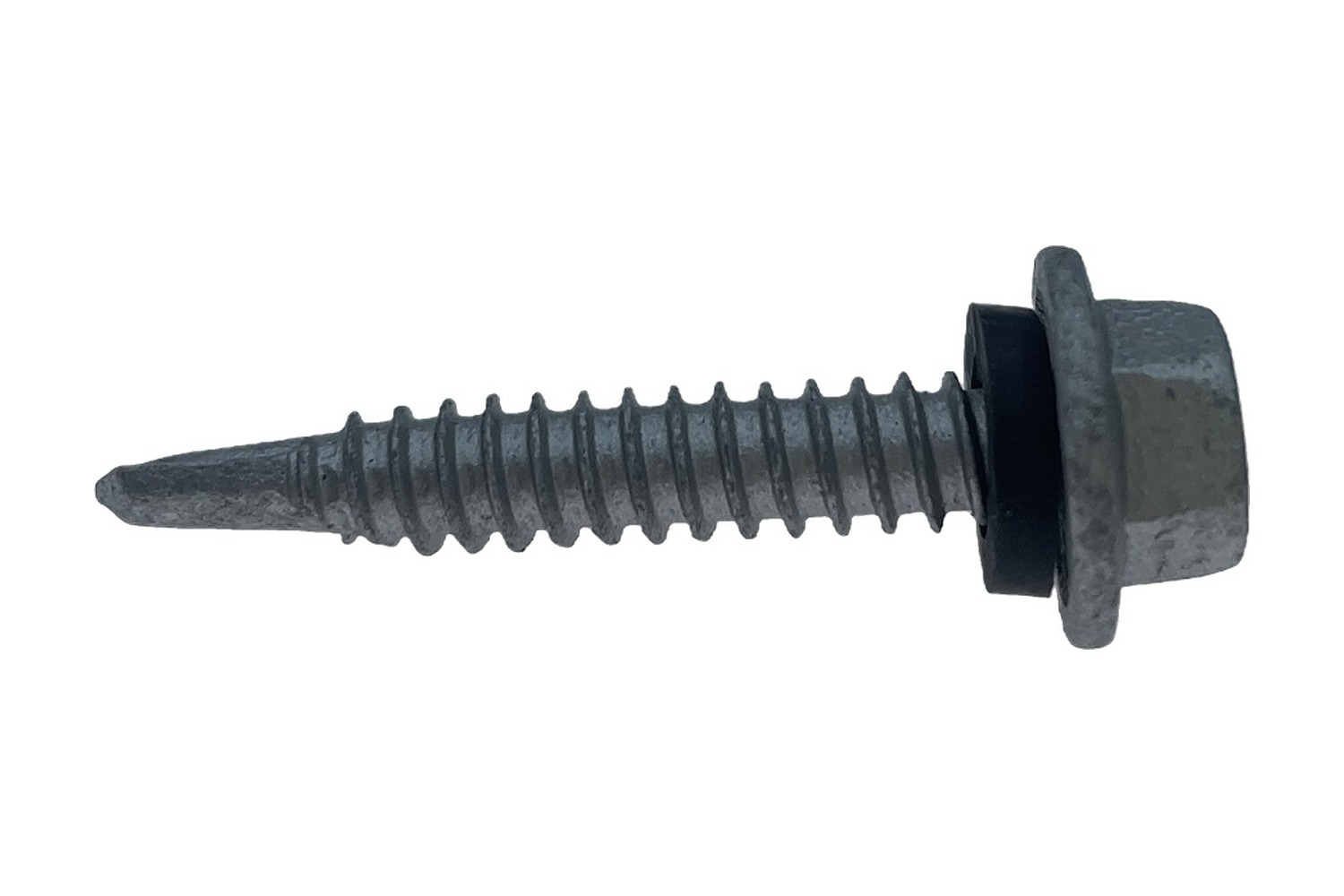
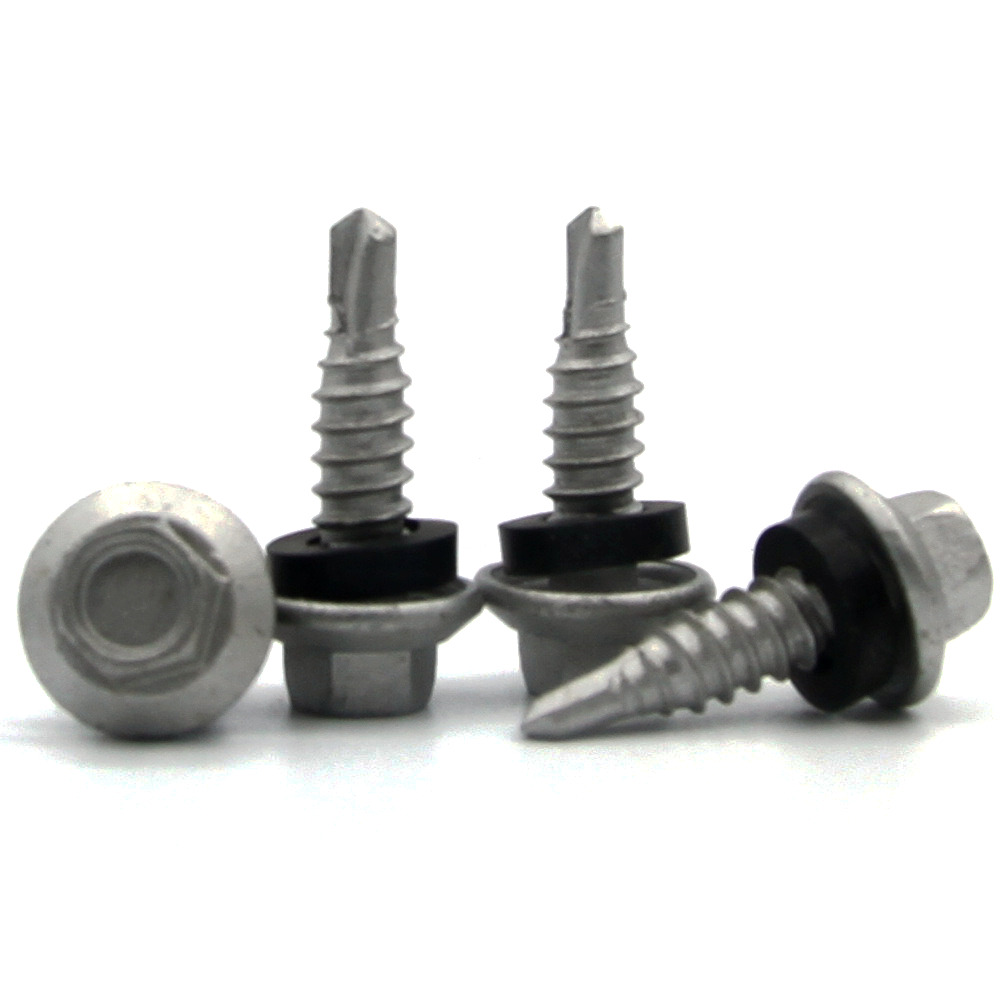
Roof sheets, wall cladding and liner panels on steel purlins are fixed with 5.5 mm (#12) and 6.3 mm (#14) shanks. Both take the drive torque of a powered screw gun without snapping at the shank, and both are available with bonded EPDM washers of 16-18 mm outside diameter, which is the bearing area a weather seal needs.
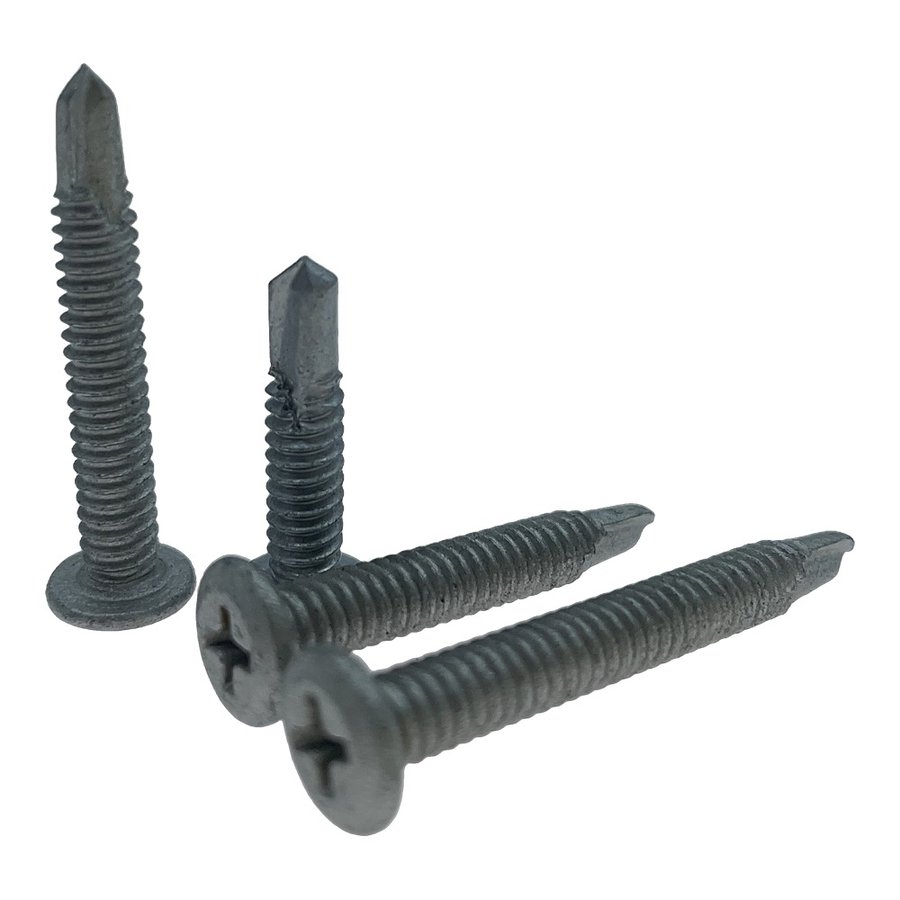
The smaller 4.8 mm (#10) sizes are not roofing screws. They are used for fixing seats, brackets and clips, usually with a cross pan head and no washer, where the bearing surface is the bracket flange rather than a seal. 4.2 mm is a light-gauge size for thin sheet and stitching. Specifying a 4.8 mm screw to hold a roof sheet is the most common sizing mistake we see: the shank is fine, but the head and washer are too small for the uplift load on the sheet area.
After the drill point passes through the purlin, at least three full threads must protrude beyond the far face. The threads immediately behind the point are the tapping section - they cut the thread in the steel and do not carry load, so they do not count. A joint that shows two threads usually looks tight and measures short; it will not reach the rated pull-out value and it is the first place a roof opens in a storm.
Check this on the first fixings of every crew, on the actual purlin, not on a test piece of sheet.
| Corrosion class | Typical environment |
|---|---|
| C3 | Inland, low pollution, heated buildings |
| C4 | Industrial, coastal more than 1 km inland |
| C4+ | Coastal, aggressive industrial, unwashed roofs |
| 304 / 316 stainless | Severe coastal, chemical plants, dissimilar metal contact |
The class has to match the environment the fastener actually sees, which is not always the class written on the building specification. A roof that never gets rain-washed collects pollutants and behaves one class worse than its location suggests. Where a steel screw would touch aluminium sheet or a stainless flashing, use a bi-metal or stainless fastener to avoid galvanic corrosion at the joint.
The hex washer head with an 8 mm (5/16 in.) socket is the default for roofing: it spreads clamp load and takes high torque. Wafer heads are for thin sheet and low-profile details where a hex head would stand proud. Pan heads with a cross recess are for brackets and fixing seats. Countersunk heads are for flush work in timber and thin metal, not for roofing.
The washer matters as much as the screw. A bonded EPDM washer vulcanized to its metal ring will not separate or spin during driving; a loose washer will. On aluminium panels, specify an aluminium backing ring so the ring does not corrode against the sheet.
Can one screw be used for both crest and valley fixing?
Only if the length is calculated for the thicker of the two build-ups. Crest fixing goes through the profile height, valley fixing does not, so a crest-length screw used in a valley will stand off the sheet and a valley-length screw used on a crest will not reach the purlin.
What length do I need for a 0.5 mm sheet on a 2.0 mm purlin?
About 3 mm of fastening thread in the purlin plus the sheet thickness and clearance - a 13 mm screw is normally enough. Confirm against the manufacturer selection table for the specific profile height.
Do timber purlins need a different screw?
Yes. Timber purlins take a self-tapping (Type 17) screw with a coarse thread and a sharp point, not a self-drilling point. The drill point will not hold in timber, and the fine thread will not grip it.
Can I drive these screws with an impact driver?
A depth-sensitive screw gun is the correct tool. An impact driver delivers torque in pulses that crush bonded washers and strip threads in thin steel; it is acceptable for brackets and pan head work if the clutch is set low.
Product-family examples. Confirm the offered configuration and supporting documents before approval.